






















 EBOOK
EBOOK Insights
 Blog
Blog Tutorials
 GRASS FED
 training
 LIVES
LIVES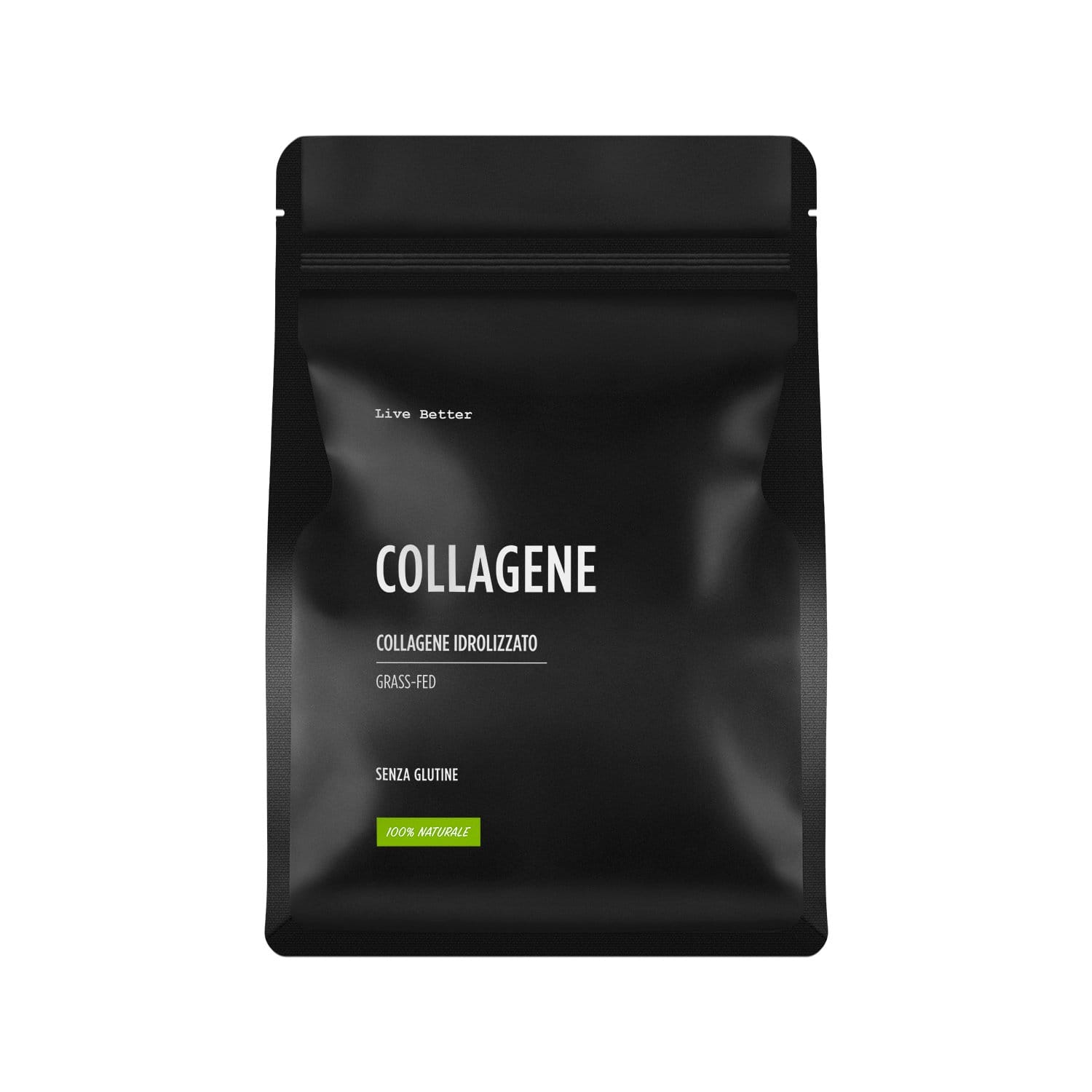
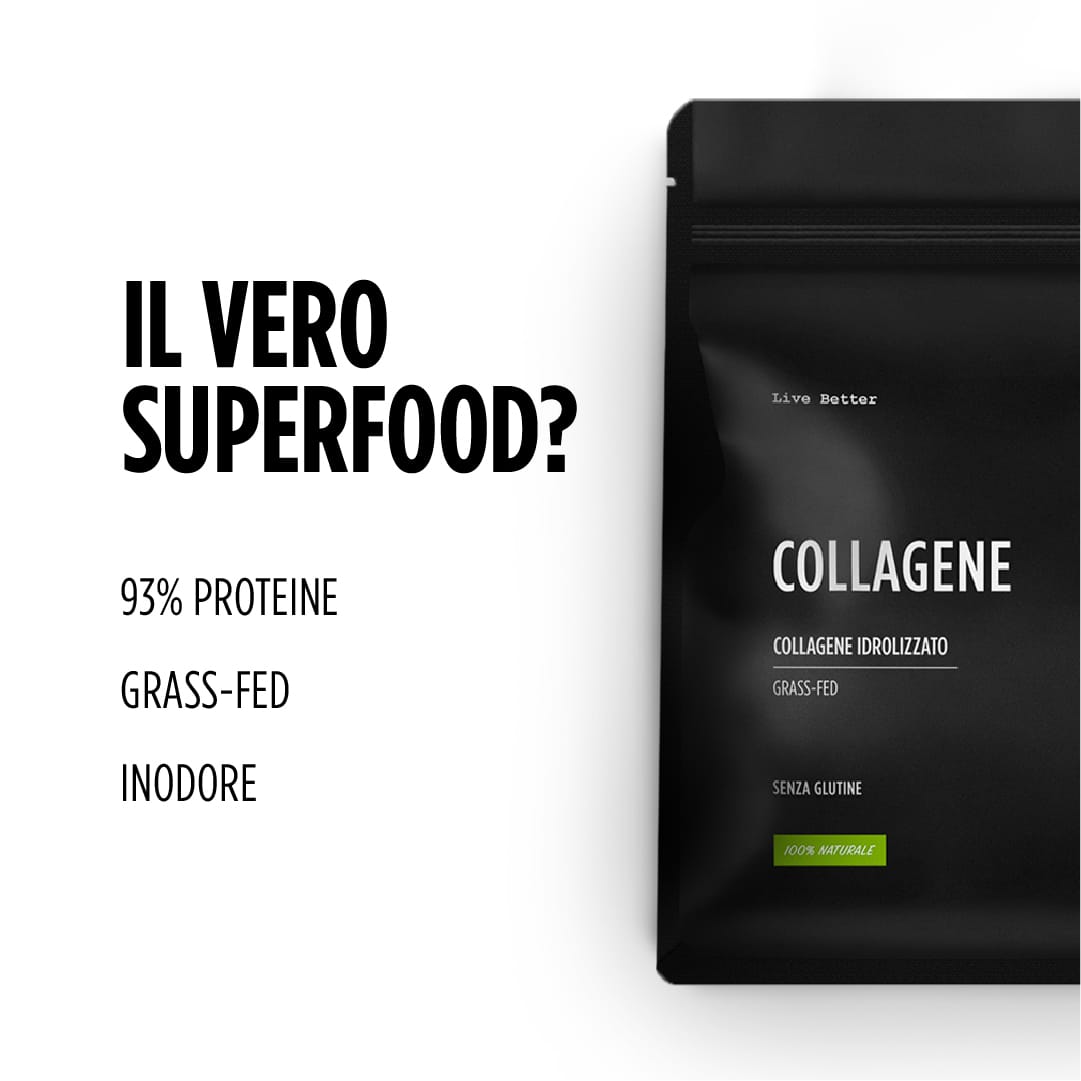
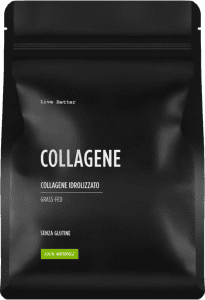
COLLAGEN
Hydrolyzed collagen from pasture-raised (grass-fed) cattle. Practically tasteless.


COLLAGEN
Hydrolyzed collagen from pasture-raised (grass-fed) cattle. Practically tasteless.
Free shipping over €65Sign up for the newsletter to get 10% discount
Free shipping over €65NEWSLETTER 10% DISCOUNT

Glycine my love
It is the absolute richest food in glycine, an amino acid used by the body to produce collagen, glutathione (antioxidant), creatine, and other molecules. Practically tasteless. Molecular weight 2,000 Daltons. To learn more about the benefits of collagen, read READ MORE.
HOW MUCH, WHEN AND HOW TO TAKE IT
HOW MUCH AND HOW TO TAKE IT
HOW MUCH: I don’t think anyone has a definitive answer today. We recommend 20–30 g for women and 30–40 g for men. WARNING: Collagen should not account for more than 30% of your daily protein intake. The remaining 70% should come from complete proteins rich in essential amino acids. Animal proteins contain essential amino acids in optimal amounts for human needs and a good amount of leucine, which is necessary for muscle protein synthesis. Read the’this insight about proteins to understand better.
WHEN: when you are most comfortable. It doesn't matter. It can be taken all at once, or in two or more times. In short, as you prefer
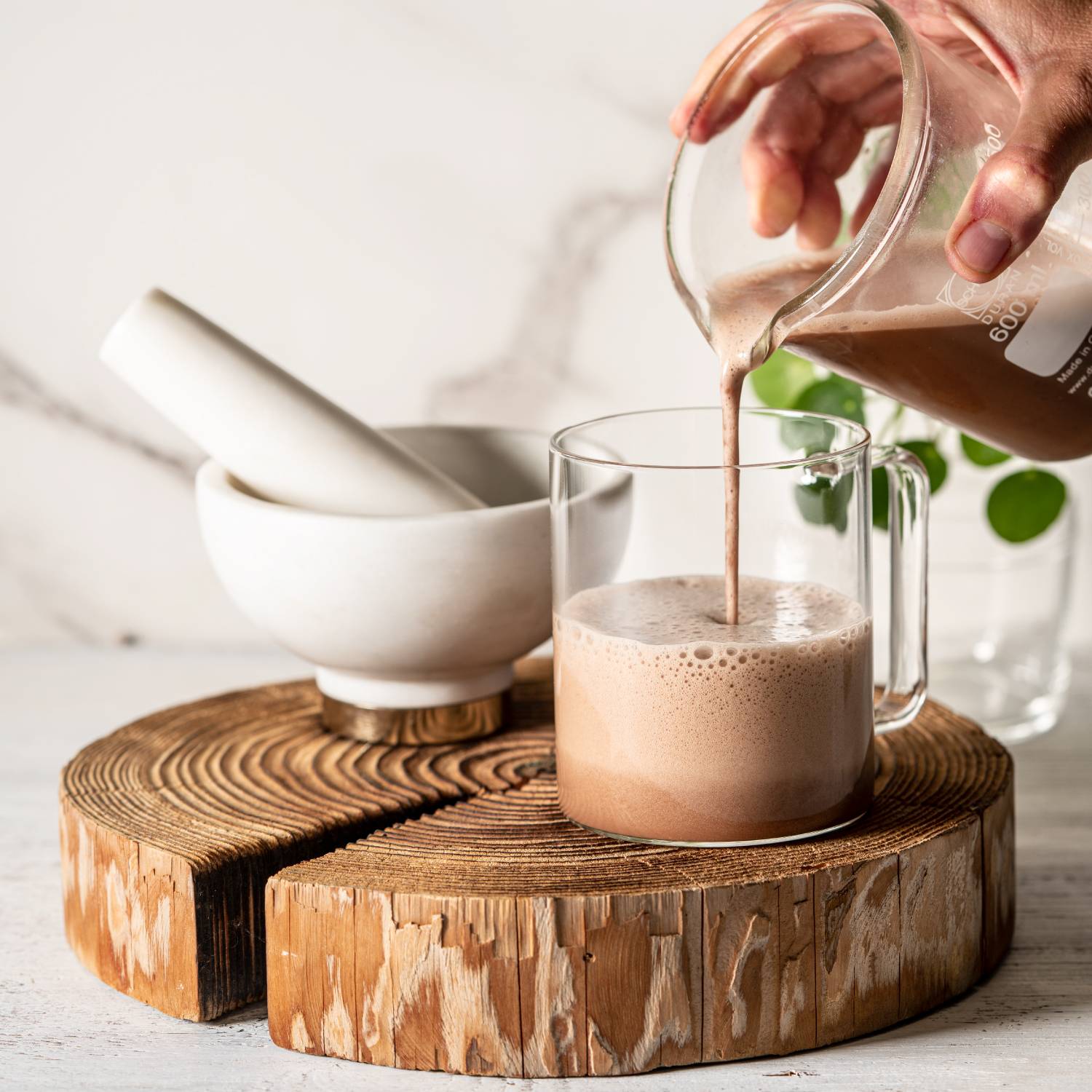
HOW: It should be dissolved in a liquid: water, hot or cold drinks, broth, yogurt, porridge, smoothies, soups, omelets, or even mixed into dough for cakes, cookies, bread, and more. It’s heat-stable and can be baked. Our collagen is truly tasteless, so it won’t alter the flavor of your recipes.
Specifications


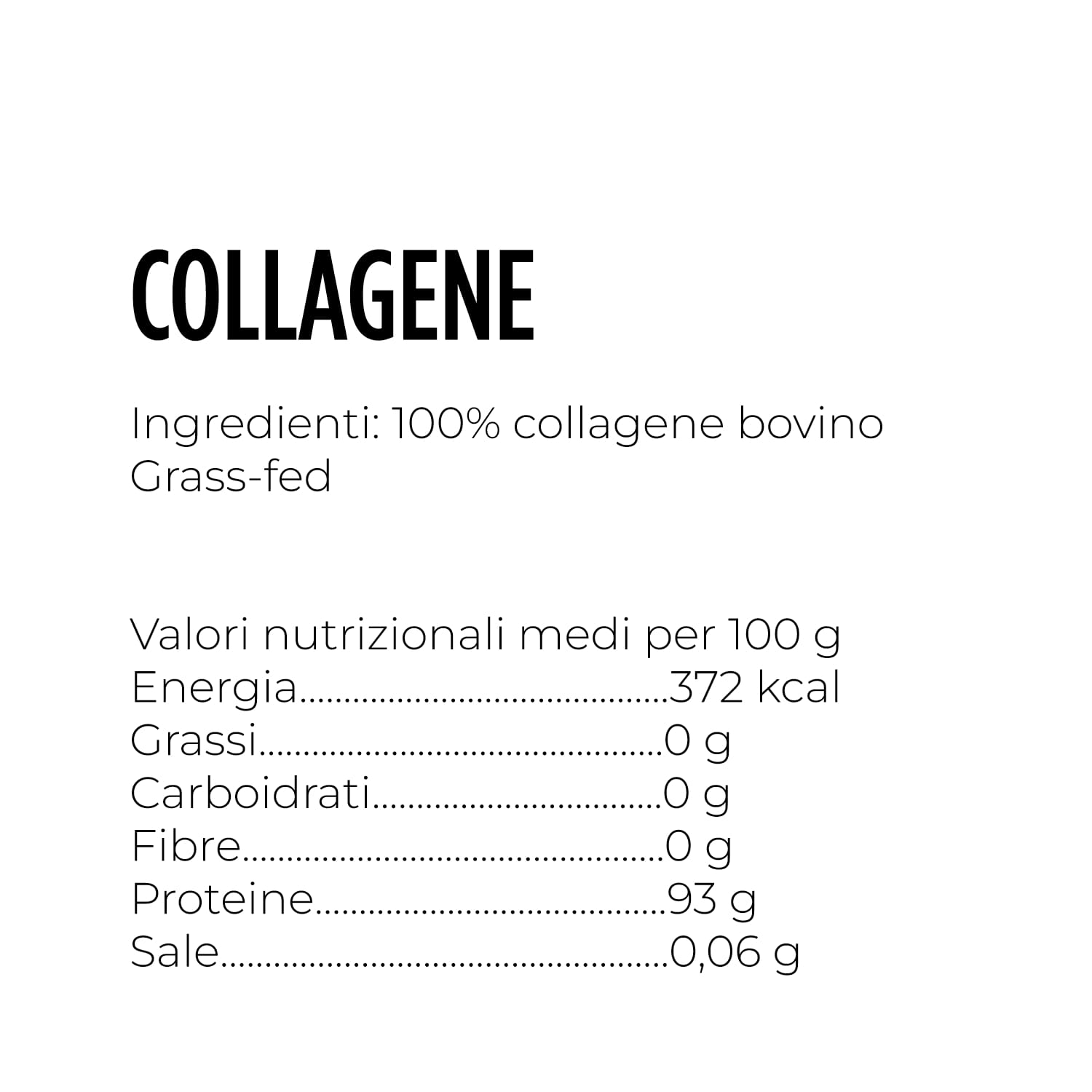
100% grass-fed bovine collagen
Contains mainly type I collagen and also type III collagen
| Mean values | 100g |
|---|---|
| Energy (kJ/kcal) | 1556/372 |
| Fats (g) | 0 |
| of which saturated (g) | 0 |
| Carbohydrates(g) | 0 |
| of which sugars (g) | 0 |
| Fiber (g) | 0 |
| Protein (g) | 93 |
| Salt (g) | 0,06 |
100 g of collagen contains the following amino acids (average values, vary for each batch)
Glycine 25.6 g
Proline 14.9 g
Hydroxyproline 11.7 g
Alanine 10 g
Glutamine 9.7 g
Arginine 7 g
Aspartic acid 5.9 g
Lysine* 3.8 g
Serine 3.4 g
Leucine* 2.8 g
Valine* 2.3 g
Phenylalanine* 1.9 g
Threonine* 1.9 g
Isoleucine* 1.4 g
Methionine* 0.9 g
Cysteine + Cystine 0.07 g
Histidine* 0.5 g
Tyrosine 0.37 g
Tryptophan* <0.01 g
*essential amino acids
Gluten-free
Lactose-free
Nickel-free
Paleo, low-carb, ketogenic
Raw materials
Collagen: Turkey
To learn about our supplier's certifications, click HERE
Unless specifically stated, the raw material is produced in the same nation of origin
Packaging: Italy
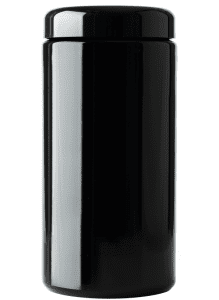
Store powdered products in a cool, dry place, ideally away from direct light. Moisture and light are the main enemies of proper food preservation. To prevent clumping or pantry pests, glass containers are the best option.
One scoop contains about 4 grams
frequently asked questions
We recommend 20–30 g for women and 30–40 g for men. WARNING: Collagen should not account for more than 30% of your daily protein intake. The remaining 70% should come from complete proteins rich in essential amino acids.
It needs to be diluted in a liquid: hot or cold drink, smoothie, soup, yogurt, omelet. The more liquid there is, the better it will dissolve and the less you will perceive its taste. Although in truth, our collagen is almost tasteless.
Our supplier manufactures in Turkey, which falls under European regulations for collagen production, so it must comply with all relevant European regulations. Companies that produce in Brazil or China are not required to comply with these regulations.
By law, any European collagen producer must comply with the following regulations:
EC 853/2004, which requires, among other things, sterilization with UHT
EC 852/2004
EC 178/2002
The supplier also has a production facility in Switzerland, but the production capacity is MUCH smaller, so we would not have the ability to guarantee almost totally tasteless and odorless collagen. The Turkish production capacity, on the other hand, allows us to always have batches of virtually tasteless collagen.
In addition, our supplier is FSSC 22000 certified, a certification scheme recognized by the Global Food Safety Initiative (GFSI). GFSI certifications are globally recognized food safety standards developed to improve food safety throughout the supply chain. FSSC certification is voluntary
It is also ISO 9001 and ISO 22000 certified
Our supplier has very high quality standards as it also supplies the world's largest food company-Nestlé, which with Vital Proteins is also the market leader in collagen. The accreditation process to become a Nestlé supplier is very complex as the quality standards required are very high. I give an example understandable even to non-technical people: collagen packaging must take place in a clean room. A clean room is a highly controlled work environment designed to minimize the presence of particulate contaminants. Simply put, it is a space characterized by highly filtered air, controlled temperature and humidity, and strict procedures to limit the introduction of foreign particles.
I realize that to some people reading Turkey may generate doubts, but they are just prejudices. Turkey is a great nation, just look at their beautiful television series. We had Cinecittà, and today? On the biggest channel in the world, Netflix, it is the Turkish series that are depopulated, not the Italian ones.
There are no known contraindications. However, collagen may not be suitable for people who:
- Sensitive to histamine
- Affected by hyperoxaluria
Consult your doctor if you have these conditions
INSTAMINE
Those with histamine sensitivity may experience side effects. Collagen tolerance is highly individual: some people with histamine intolerance have no issues, while others may react.
If you have a histamine-related food sensitivity or mast cell activation syndrome (a more severe and clinically recognized condition), you may need to avoid collagen, gelatin, bone broth, fermented vegetables, and seasoned foods, depending on your individual tolerance.
If you have problems with histamine, I recommend the following. READ MORE Of functional physician Dr. Lorenzo Toccacieli.
Only individuals with this type of condition might experience problems when taking collagen or gelatin, we use the conditional because there is currently no conclusive evidence. This is due to the fact that some hydroxyproline and glycine may be converted into calcium oxalate.
Oxalates can contribute to calcium oxalate stone formation only in patients with secondary hyperoxaluria. For all other individuals who have calcium oxalate stones but not hyperoxaluria, the general recommendation is simply to reduce foods that are particularly high in oxalates — such as beets, spinach, and tomatoes. Once these are removed, there is little evidence linking moderate oxalate intake to an increased risk of stone formation. Instead, dehydration, low citrate levels, metabolic syndrome, and genetic predisposition are currently considered the main factors associated with kidney stone development.
Today it is estimated that calcium oxalates excreted with urine result from: (total does not make 100% because these are estimates, not certainties)
- For about 50% from the oxalates in the food we consume (1)
- For about 40% from ascorbic acid or ascorbate (vitamin C). In people predisposed to stone formation, it appears that ascorbic acid may contribute even more, up to 80%, to the presence of oxalates in urine. (2)
- For about 15% from hydroxyproline (1)
- For less than 5% from glycine (1)
Collagen and gelatin contain glycine and hydroxyproline
If you have problems with kidney stones you might find it helpful to look at this live with Dr. Francesca Manfra, functional physician, In which we talked about what causes kidney stones and what can be done to decrease their formation. In the first 20 minutes, Dr. Manfra explains in detail why collagen is NOT one of the causes of kidney stones.
Yes, of course, it's a protein.
Recommended dose: 1 scoop per 15 kg or approximately 1.3 g per 5 kg
Absolutely not.
Collagen is a protein, and to be absorbed, it only needs to be digested. Vitamin C is needed by our body to synthesize new collagen; to be precise, it is needed to hydroxylate proline and lysine.
Is it necessary to supplement with it? Currently, no one has a definitive answer to this question. I take it because it has many benefits and I get it from natural sources, “Pure Vitamin C” by Dr. Giorgini.
How much vitamin C should you take? It depends on your lifestyle. Be careful: there are intestinal absorption limits because it is mainly absorbed in the small intestine via specific transporters (SVCT1, Sodium-Dependent Vitamin C Transporter 1). Since the number of transporters is limited, as the dose increases, the absorbed percentage decreases.
Reference values in healthy adults:
| Single dose | Absorption rate |
|---|---|
| 30-100 mg | 80–100% |
| 200 mg | ~70–90% |
| 500 mg | ~50–70% |
| 1000 mg | ~40–50% |
| 2000 mg | ~20–30% |
- 100 mg ingested → approximately 80–100 mg can be absorbed.
- 1000 mg ingested → approximately 400–500 mg can be absorbed.
- The unabsorbed portion remains in the intestinal lumen and is eliminated with the feces.
“I was advised to take type II collagen for my joints, what type of collagen does yours contain?”
It does not matter to our bodies what type of collagen we take in, because when we ingest collagen in order for it to be absorbed by the intestines it must be “broken down” into the individual amino acids of which it is made or into small groups of them. Whether these amino acids come from type I, II or other collagen makes no difference. Our body will then use some of these amino acids to build new collagen.
However: our collagen contains mainly type I collagen and to a small extent type III collagen, as it is obtained from the skin of (pasture-raised) cattle.
There are multiple types of collagen in our bodies, to date 29 are known, but let's look at just the two main ones:
Type I: about 90% of the collagen found in the human body. It is found in skin, bone, tendons, arteries, fibrous cartilage and cornea.
Type II: hyaline cartilage, vitreous body.
Hyaline cartilage is smooth and flexible but less resistant to traction than fibrous cartilage. It is found in joints (articular cartilage), the ends of long bones (growth cartilage), trachea, bronchi, and nose. It reduces friction in joints, cushions shocks and is involved in bone growth. It is the most common type of cartilage.
Fibrous cartilage is dense, very resistant to compression and traction, and is stiffer than hyaline cartilage. It is found in knee menisci, intervertebral discs, pubic symphysis, and some joints (e.g., temporomandibular). It absorbs shock and provides mechanical strength in areas subjected to high stress or pressure.
Osteoarthritis is a condition related to the deterioration of cartilage. In most cases it is due to aging (more than 70% of people over 55 suffer from it) but it can also be caused by poor posture that makes the joint work poorly. For example, after an accident if we do not properly recover the muscles in the knee, it can work out of alignment and wear down the knee cartilage. Another cause can be vare or vague knees. Obesity also contributes to cartilage deterioration.
Can collagen help? There are several studies (1,2) where collagen intake has been observed to be beneficial for joints, but these are preliminary results that do not demonstrate a certain causality. Currently, there are no EU-authorized health claims for hydrolyzed collagen in relation to joint function.
Anecdotal evidence: Many people report that taking collagen has improved their joint condition. Unfortunately, anecdotal evidence is not scientific evidence, as it is based on personal experiences that could be influenced by many factors.
You don't have to necessarily take collagen, just habitually consume collagen-rich foods such as: gelatin, ribs, animal skin (the richest one is pig skin), collagen-rich cuts such as bovine tail. (3)
BIBLIOGRAPHY
1) https://pmc.ncbi.nlm.nih.gov/articles/PMC8521576/
2) https://pubmed.ncbi.nlm.nih.gov/30368550/
3) https://fdc.nal.usda.gov/food-search?component=1225
No, that’s incorrect. The claim is based on a misreading of this study. What the study really shows is that marine collagen retains 1.5 times more water than collagen from mammals.
All collagen on the market is hydrolyzed. If it were not it would be called gelatin. These are the two products you get from animal collagen.
Let's start at the beginning: collagen is the "glue" that holds the bodies of animals together. In its natural form it is insoluble. Gelatin, what we call "isinglass," is made by partially dredging collagen with heat. Gelatin is soluble in hot water. Collagen powder is obtained through the process of hydrolyzing animal tissues such as bone, skin, and cartilage (our collagen is produced exclusively from the skin of pasture-raised cattle. Collagen powder is soluble in both hot and cold water.
Gelatin forms a gel; collagen does not because it is composed of smaller molecules. Our gelatin has a molecular weight of about 50,000 Da (dalton). Gelatin can have different molecular weights from 20,000 Da to 100,000 Da. The molecular weight of gelatin determines its Bloom, or gelling power; the higher the bloom, the higher the gelling power. Our collagen has a molecular weight between 1,800 Da and 2,000 Da. In contrast, the native collagen molecule (found in animal tissues) has a molecular weight of 300,000 Da.
Why am I telling you all this? During digestion, proteins must be broken down in order to be absorbed; if a protein is smaller in size it is absorbed faster because it is easier to break it down.
This is why collagen is more easily digested than gelatin: it's already broken down into peptides, making it, in a sense, “pre-digested.”
In Europe, the production of gelatin and collagen must comply with strict purity standards. The final product must have a conductivity and therefore a salt content below 2000 µS at 1% concentration. To reach this level of purity, manufacturers use ion exchange resins. These include cationic resins, which remove positively charged ions (cations), and anionic resins, which remove negatively charged ions (anions). This process has a direct impact on the overall purity of the product, ensuring that the heavy metal content is practically zero.
In addition, the limit content of heavy metals is subject to EU reg. 853/2004.
I wrote a this insight On all objections to collagen.
A couple of points here: one of the most popular objections is “the molecule is not absorbed whole.” These people believe that you supplement collagen by thinking that the collagen molecule (bovine, porcine, or marine) is absorbed whole from the gut and goes whole into the skin to plump it up. This is nonsense and shows the ignorance of these people on the subject.
1) Any protein to be absorbed must be digested, that is, “cut” into smaller pieces that can be absorbed by the intestines. No company selling collagen claims that it is absorbed whole, partly because they all sell collagen hydrolyzed.
2) All collagen is hydrolyzed: this means that the original molecule is “cut” into smaller molecules, the peptides. In this way it is as if it were pre-digested and thus is more easily and quickly digested. So the collagen was not whole to begin with either.
The reason I supplement with collagen is glycine. There is a growing body of evidence suggesting that glycine is a conditionally essential amino acid: our bodies cannot produce enough of it to meet daily needs. Furthermore, it's observed that individuals with metabolic disorders (obesity, type 2 diabetes, fatty liver) have low circulating glycine levels. These low glycine levels are also often found in cases of inflammation, insulin resistance, high oxidative stress, advanced pregnancy, and exposure to xenobiotics (substances foreign to an organism's normal metabolism, whether natural or synthetic). An important clarification: currently, there is no scientific certainty that supplementing with collagen, glycine, or consuming foods rich in glycine can improve these pathologies.
Consuming collagen (the food richest in glycine) provides our body with this extremely important amino acid. Glycine accounts for 33% of the amino acids that make up collagen and is necessary for the production of glutathione, heme groups, purines, creatine, and bile salts.
Important: You don't have to take collagen, just incorporate foods that contain it into your daily diet: gelatin, nerves, joints, or animal skin. Bone broth, contains interesting levels of collagen only if it becomes gelatinous when it cools.
The absolute richest natural food (which has not undergone processing) in collagen is pig skin.
Our collagen is produced only from cattle skin
No, there is no such thing as organic collagen because part of the process by which it is produced, hydrolysis, is not allowed in the organic protocol. This is the setssa reason why organic stevia does not exist: one step of production is hydrolysis.
No, there is no such thing as vegan collagen. Collagen is the structural protein found in all animals. In plants this role is filled by cellulose, which is indigestible to us humans. What is sold as “vegan collagen” is a mix of amino acids similar to what is found in animal collagen. Similar but not the same: for example, plant collagen lacks hydroxyproline, one of the most+ abundant amino acids in plant collagen The amino acids used to create “vegan collagen” can be extracted from plants or synthesized in the lab.
Live Better products can also be taken during pregnancy, except for Pure Biltong and Kaminwurz, as they are cured.
Pure Jerky is cooked, not raw meat, so there's no problem.
Better Mayo is made with pasteurized egg yolk. The yolk is pasteurized, undergoing a controlled heat treatment at 64°C for 8 minutes and then refrigerated at +2°C. Under proper storage conditions and shelf-life, the product is generally suitable for consumption during pregnancy. Unless otherwise indicated by a medical professional and in accordance with the storage instructions on the label.
The only caution is Chokkino because it contains caffeine
A cup of Chokkino espresso contains only 11 mg of caffeine (an espresso coffee contains 80 mg)
EFSA's recommended daily limit of caffeine for pregnant women is 200 mg
Caffeine is naturally present in cocoa, and therefore also in chocolate. However, chocolate contains less caffeine than cocoa powder.
Cocoa powder contains less cocoa butter and therefore the caffeine is "concentrated"
All Live Better products can be taken while breastfeeding.
Consult your doctor for special needs
No, you can also subdivide.
Studies suggest that the best times to consume protein are at breakfast and dinner. To stimulate protein synthesis, it's important to consume at least 30 grams of complete protein (containing all essential amino acids) or 12 grams of essential amino acids in a single meal. Since collagen is not a complete protein, it’s ideal to combine it with other high-quality protein sources such as eggs, fish, or meat in the same meal.
No, it is not necessary to stop taking it if it is just collagen without other ingredients.
We consider collagen in its pure form a food, not a supplement, as collagen is nothing more than hydrolyzed gelatin, meaning it's broken down into smaller molecules.
Throughout evolution, our ancestors also consumed the parts of the animal rich in collagen, which contains 25% of glycine. Today, we consume only muscle, which contains only a minimal amount of collagen. Thus, for 2.5 million years and up until a few decades ago (even our grandparents ate foods rich in collagen), the body obtained glycine through the diet.
Yes of course. Collagen is a protein, and children need more protein than an adult because they are growing.
Indeed!
MAPs contain only essential amino acids, whereas collagen contains mainly glycine, proline, and hydroxyproline, which are nonessential amino acids.
No. As a matter of environmental sustainability all our bags do not contain a measuring cup. If they did contain it, customers who often buy our products would end up with a collection of measuring cups. This would make no sense, as the Earth is the only planet we have and we need to take care of it by living consciously. Instead, our boxes contain the measuring cup, as it is usually the first purchase a customer makes.
You can view which products are suitable for ketogenics by selecting the relevant filter in this page
Our products suitable for the ketogenic diet are:
Chokkino, ChokkoCocco, Chokkococcoccino
Collagen
Protein Bliss and Creamy Bliss spreads
Coconut milk powder
Powdered almond milk
Better Mayo
Ghi
Better Whey
Pure Jerky
Pure Biltong
Jelly
Bagna cauda
Better Sweet
Choko Loco (erythritol)
Albumen powder
Yolk powder
Cocoa powder
Coconut flour
Keto Pancakes
Magic Powder
Vanilla Dream
Keto Piada
Keto Chok
Erythritol
Psyllium
The date shown on NON-fresh products is not the expiration date, but the TMC.
TMC means Minimum Storage Term and is NOT an expiration date. The product is always perfectly edible after this date. When you read “best before...” on a product, it means it is not an expiration date but the TMC minimum shelf life.
PLEASE NOTE: Our products are very stable because they are in powdered form and contain mainly saturated fats, which are naturally very stable. We have tested many of them even more than one year past their TMC date, and they were still in perfect condition, including coconut milk, cocoa powder, erythritol, and arrowroot.
How to tell if a product is still good? Very simple!
Just take a look: are there any signs of mold, insects, or anything unusual?
Smell: smell?
If the answers to these two questions are no, the product is still good.
Think about this: the expiration date was invented 50 years ago. Humankind has existed for 2.5 million years. Your senses are perfectly capable of recognizing a product gone bad. Trust us!
10% of European food waste is caused by the misinterpretation of this date. Tell your friends about this important distinction between TMC and expiration date. Awareness will save the world.
WHAT OUR CUSTOMERS THINK
REVIEWS
217 reviews for COLLAGENE
4.99
No reviews found.

checked
-
COLLAGEN - 500 g
Cristina S.
26.06.2026 -
COLLAGEN - 500 g
Excellent, I only use that. All your products are exceptional. I'm repeating myself, I've used almost all of them, and they're all 5-star plus. Thank youuuuuuu 👏👏👏😘
Anna D.
26.06.2026 -
COLLAGEN - 1 k g
Excellent product, it has now become part of my daily routine. After almost a year, I've noticed my skin is softer and smoother. For my joints, being a runner, I no longer have joint pain. I've also noticed I feel less cold in the winter and my metabolism is always active.
Luke B.
05.06.2026 -
COLLAGEN - 1 k g
I noticed after some time that I wasn't losing any more hair.
Paola C.
30.05.2026 -
COLLAGEN - 500 g
I've been using it for a long time, I like it, and I confirm it's tasteless.
Claudia G.
21.05.2026
recipes

INGREDIENTS
100 g Greek yogurt 0%
1 egg
12 g Maple syrup
15 g Creamy Bliss macadamia
24 g Better Whey
12 g collagen
1.3 g of baking powder consisting of 50% baking soda and 50% cream of tartar
SUBSTITUTIONS
Can Creamy Bliss macadamia be replaced with another nut butter or with ghi (solo 10g).
I prefer Creamy Bliss macadamia over the ice version.
Maple syrup can be substituted with honey or other sweeteners.
Keto version: replace with 12 g of erythritol 4G Better Sweet
PROCEDURE
Preheat the oven to 175°C fan. Blend everything
Pour into 4 muffin cups
Bake for about 20 minutes
MACRO
relating to 4 muffins
404 kilocalories
48 g protein
16g fat
13 grams of carbohydrates
MACRO KETO
relating to 4 muffins
373 kcal
48 g protein
16g fat
4.8 grams of carbohydrates
Elena's Recipe
June 25, 2026


INGREDIENTS
450g Greek yogurt
120 ml heavy cream with about ten dates soaked, then blended
3/4 eggs
200 g Keto Pancakes
Collagen at your pleasure
1 teaspoon baking powder
1/2 teaspoon baking soda
A handful of walnuts
PROCEDURE
Heat the cream and soak the dates, then blend together. Mix the cream and date mixture with the yogurt and eggs. Add the Keto Pancakes, collagen, baking powder, and baking soda.
Incorporate the nuts into the dough. Bake in a hot oven at 180°C for about half an hour, lowering the temperature slightly in the last 10 minutes and turning off the top heat only.
NOTE
It can be spread with chocolate or pistachio cream. Adding a banana or a spoonful of ghee makes the cake moister. It's a revisited fusion of two different recipes.
Cinzia's Recipe
June 19, 2026


INGREDIENTS
75 g Banana
1 egg
12 g maple syrup
15 g Creamy Bliss macadamia
24 g Better Whey
12 g Collagen
1.3 g baking powder (50% baking soda, 50% cream of tartar)
SUBSTITUTIONS
Can Creamy Bliss macadamia be replaced with another nut butter or ghee (only 10g). I prefer it with Creamy Bliss macadamia over the ghee version.
Maple syrup can be substituted with honey or other sweeteners.
PROCEDURE
Preheat the oven to 175°C fan. Blend everything
Pour into 4 muffin cups
Bake for about 20 minutes
MACRO
relating to 4 muffins
400 calories
40 g protein
16g fat
28 grams carbohydrates
TO MAKE THE LARGE PLUMCAKE
For a loaf pan of about 20 cm
Multiply the ingredient quantities by 3
Blend everything together
Put parchment paper in the baking pan and pour in the mixture
Bake at 175°C fan-assisted for 15 minutes, then 15 minutes static oven at 175°C
Insert a knife; if it comes out dry, it's ready.
FRENCH TOAST
Cut a 2 cm thick slice of the pound cake.
Melt 5 g of ice in a non-stick pan
Brown the slice on both sides (when changing sides, add more fat if needed, this is crucial for browning it well!)
Serve with a drizzle of maple syrup
MACRO
relating to the quantities shown in the recipe
239 calories
14 g protein
16g fat
12 grams of carbohydrates
Elena's Recipe
June 09, 2026


INGREDIENTS
2 eggs
2 tablespoons of collagen
1 tablespoon of Better Whey
1 tablespoon gelatin
ghi Coconut oil for cooking
PROCEDURE
Blend everything until you get a solid mixture, similar to beaten egg whites.
Heat the griddle (brush it with a little ghee or coconut oil). Pour in the batter, close, and cook.
Gisella's Recipe
June 3, 2026






I use it every day in many drinks and foods. Now I also add it to my protein in smoothies. I like it and I reach my daily protein quota.