
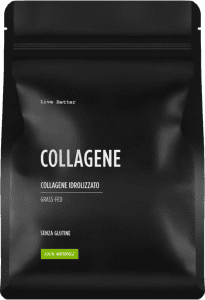

















No, collagen provides our body with the amino acids necessary for our body's collagen synthesis. Our body's proteins are constantly renewing themselves, and since collagen is the most abundant protein in our body, we constantly need amino acids to renew it.

In addition, collagen is a food. In fact, I remember that collagen is nothing but hydrolyzed gelatin (which means "cut into smaller molecules").

My personal hypothesis is that our body does not produce enough glycine (read the the study) because throughout human evolution, people consumed all parts of the animal including those rich in collagen. These parts provided a natural source of glycine, which makes up about 25% of collagen. As a result, the body didn't need to produce much of it on its own. Today, however, when we eat meat, we mostly consume muscle tissue, which contains only small amounts of collagen. This means the body no longer receives the same glycine supply it was used to getting for over 2.5 million years. By supplementing with collagen, we're simply restoring a source of glycine that was once a natural part of the human diet.

The study mentioned above suggests that we may face a daily glycine deficit of around 10 grams. Glycine is essential for collagen synthesis and collagen, as a reminder, is the most abundant protein in the human body. Could this glycine shortfall be one of the reasons why, as we age, our skin loses elasticity and our bones become more fragile? I donโ€™t know for sure but it seems logical to think it might be. Glycine is also critical for the synthesis of glutathione (the study) one of the most powerful antioxidants produced by our bodies. Since aging is also linked to increased production of free radicals, could a glycine deficiency lead to lower glutathione levels and therefore a reduced ability to neutralize free radicals? I canโ€™t say for sure, but once again, logic seems to point in that direction.