




















 EBOOK
EBOOK Insights
 Blog
Blog Tutorials
 GRASS FED
 training
 LIVES
LIVES
DIFFERENCE BETWEEN EXPIRATION DATE AND TMC
Did you know that every year 10% of food waste in Europe is caused simply by confusion about expiration dates? Help me spread the word: share this with friends and family. We must stop this unnecessary waste!
Avoiding throwing away perfectly good food is not only the right thing to do—it also saves money!
Let’s start with the basics:
Fresh products: have an expiration date, meaning that eating them after this date may be harmful. On the label you’ll find “use by”.
Non-fresh products: have a “best before” date (TMC – minimum shelf life). After this date, the products are still safe to eat. On the label you’ll find “best before”.
See the difference? It’s all in the word “best”..
For years now, there’s been debate in Europe about removing “best before” dates from non-fresh products but big food companies continue to oppose it. You can imagine why...
How long after “best before” is food still good? It depends. One of the main factors is the type of fat in the product. Unsaturated fats turn rancid faster than saturated fats. If you want learn more, read this insight on saturated and unsaturated fats.
Example: our Better Mayo stays perfectly good for 120 days after opening (if refrigerated), because it’s made only with MCT oil which contains only saturated fats, making it very stable.
How to check if food is still good?
Look: any mold, bugs, or odd things?
Smell: does it stink?
If both are no, then it’s still fine.
Think about it: expiration dates have existed for just 50 years,while humans have been around for 2.5 million years. Our senses are well-equipped to tell if food is still edible.
WARNING:check out Too good to go, an amazing app that saves food close to its “best before” date at discounted prices!
Spesso mi chiedete “What about opened products?”
For vacuum-packed or modified atmosphere packaging, opening makes a difference. Once oxygen gets in, oxidation starts, so these foods should be eaten within a few days. But for regular dry goods, opening doesn’t matter much.
Andiamo a vedere in dettaglio alcuni dei nostri prodotti così da capire bene cosa permette loro di conservarsi e cosa dobbiamo fare per conservarli al meglio una volta aperti.
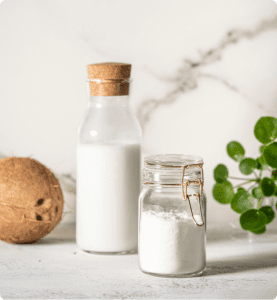
POWDERED PRODUCTS
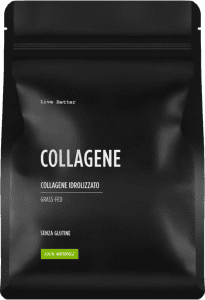
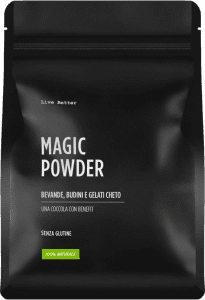
The fact that the bag is open makes no difference the best before date printed on the label still applies. All products are perfectly fine even months after the best before date, and some even for years for example collagen, cocoa, and coconut milk powder. We’ve tested them, so we know for sure.
Of course, this is true only if stored properly: in a cool, dry place, tightly sealed, away from heat sources, and without letting moisture enter the package. What keeps them stable is precisely the absence of water.
How long they keep also depends on the amount and type of fat they contain. Collagen contains no fats, so nothing that can oxidize: extremely long shelf life. Coconut milk powder: 65% fats, but 94% of them are saturated, very stable, though less than collagen.
Almonds: about 55% fats, but 91% are unsaturated, so oxidize much faster. For this reason, it’s better to avoid buying almond flour. When nuts are ground, the surface area exposed to oxygen increases, and the product goes rancid more easily. Better to grind them fresh at home in a blender. Otherwise, buy vacuum-packed almond flour it contains less oxygen and has a lower risk of fat oxidation.
TIP FOR SUMMER: when it’s very hot, keep coconut milk powder in the fridge. It contains 65% coconut oil, which melts in heat. In very hot weather, the powder may turn into a delicious coconut cream. In the fridge, it will harden again, since coconut oil solidifies in the cold. Take advantage and try eating a little clump of coconut milk powder—it tastes like candy! But don’t overdo it: 5 g (1 scoop) of coconut milk powder = 35 kcal! 😜
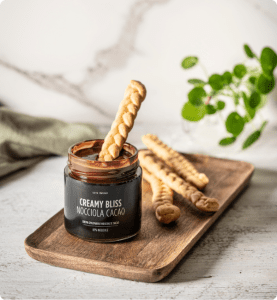
SPREADS
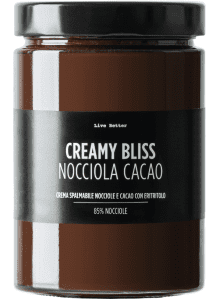
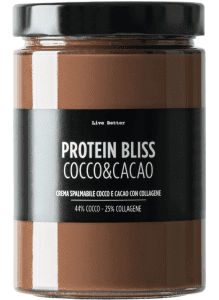
They’re not vacuum-packed, so once you open them it makes no difference. What keeps them stable is the fact that they are anhydrous, meaning they contain no water. To preserve them properly, it’s essential to always use clean utensils and never introduce moisture into the jar. They keep well outside the fridge.

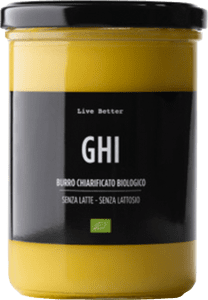
GHEE AND TALLOW
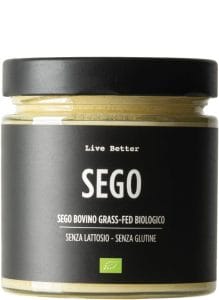
These are not vacuum-packed either, so again, opening them doesn’t make a difference. What allows them to stay fresh is the absence of water. Just like olive oil: it keeps well outside the fridge because it’s water-free and made only of fats.
But there’s more!
The stability of dietary fats depends on how many saturated fats they contain:
– Olive oil: 15% saturated fats, 75% monounsaturated fats
– Tallow: 50% saturated fats
– Ghee: 70% saturated fats
More saturated fats = more stability against oxidation.
If you want to understand why, here.
So why does butter need to be stored in the fridge? Because butter contains about 14% water, while ghee, tallow, and oils are pure fat, with no water, which makes them shelf-stable. Water encourages bacterial growth that’s why fresh fruit and vegetables don’t last long.
Of course, you can keep ghee and tallow in the fridge, they’ll just become harder. Since tallow has “only” 50% saturated fats, we actually recommend refrigerating it after opening. Olive oil could also be stored in the fridge to slow down oxidation, but the problem is that it solidifies and then you can’t pour it!
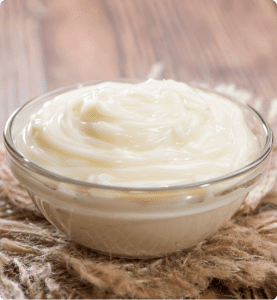
BETTER MAYO
This one is not vacuum-sealed either, so again it doesn’t matter whether it’s open or closed. What allows it to keep is its acidity combined with the absence of unsaturated fats. Once opened, it stays perfect in the fridge for up to 120 days, although after about 90 days the flavor starts to change slightly.
PROTEIN SNACKS
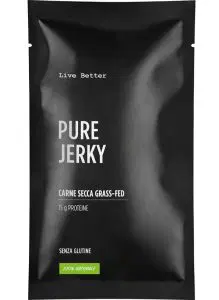
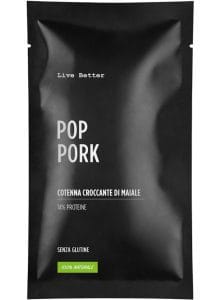
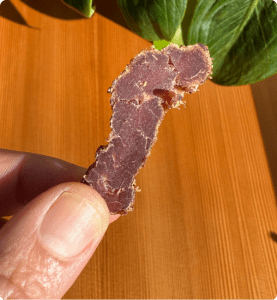
Kaminwurz and Pop Pork are packaged in modified atmosphere, so once you open them oxygen gets in and they need to be eaten within 3 days. Pure Jerky and Pure Biltong, on the other hand, are not, so once opened they should be eaten within 24 hours.
TIP FOR SUMMER: Cold always helps food stay fresh longer because it slows down microbial growth and the chemical reactions that cause food spoilage. But you need to watch out for humidity. If you store a powdered product in the fridge, make sure it’s tightly sealed so moisture can’t get in. The same goes for fatty products like ghee or spreads. Moisture is the enemy of food preservation because it encourages bacterial growth.
That’s it. I hope this little deep dive was useful! Please spread the word and let’s fight against unnecessary food waste caused by not knowing the difference between expiration date and best-before date. Knowledge sets you free. ❤️


Leave A Comment