
























 EBOOK
EBOOK Insights
 Blog
Blog Tutorials
 GRASS FED
 training
 LIVES
LIVES
GLYCINE: A SEMI-ESSENTIAL AMINO ACID?
A few weeks ago I read a very interesting study on glycine, the main amino acid in collagen. Clicking this link you can read the study.
There are 20 amino acids in the human body and they are classified into:
- Non-essential amino acids: they are produced by our
- Essential amino acids: we need to introduce them through food
Glycine is a nonessential amino acid, but the researchers of this study argue that our body does not produce enough of it to meet its needs, and for this reason glycine should be considered a semi-essential amino acid.
BENEFITS GLYCINE
Glycine is an amino acid that I love very much as it is necessary for the production of glutathione one of the most powerful antioxidants our body produces. In addition, glycine has so many other benefits1
- protects the cardiovascular system
- controls ìnflammationî
- improves sleep
- protects the liver
- controls metabolic syndrome
- Counteracts protein glycation
- controls diabetes
COLLAGEN
Collagen is al most abundant protein in the human body, accounting for almost 30% of the proteins of which we are composed. Collagen is 33% composed of glycine, so the availability of glycine is critical for the collagen turnover process. Over the past two decades, many studies have shown that the amount of glycine available is not sufficient to cover requirements and therefore it is advisable to supplement this amino acid.
For this reason, the authors of the study say that glycine should be considered a semi-essential amino acid. Our bodies can produce it, though, so why should we consider it semi-essential? Let's go find out the reasoning of the researchers of this study.
In the past, collagen was thought to have a very slow turnover, but it is now recognized that collagen turnover constitutes a significant portion of daily protein turnover.
WHAT IS PROTEIN TURNOVER?
There are thousands of different proteins in the body. They make up about two-thirds of our body's "dry" mass (thus excluding water, which makes up about 60% of body mass in an adult).

Proteins are large molecules composed of amino acids. Imagine a protein as a pearl necklace, where the pearls are the amino acids.
Proteins are in a continuous state of turnover: they are demolished and then rebuilt.
Protein breakdown provides the body with a continuous supply of amino acids to make new proteins.
However, during the process of protein breakdown some amino acids are
irreparably damaged and for this reason we need to replenish them through nutrition.
At this point let's look at the calculations made by researchers to determine how much glycine our bodies use daily and whether the amount available is sufficient to corpriate our needs.
HOW MUCH GLYCINE DO WE PRODUCE?
Glycine production amounts to about 3 grams per day. In addition by diet we introduce 1.5 to 3 grams per day (depending on how much protein we eat).
This table details the metabolic pathways that contribute to total glycine production

If glycine is truly a nonessential amino acid these 3 grams per day should be enough to cover the daily requirement. Let's go and see!
HOW MUCH GLYCINE DO WE USE?
Glycine is used in two ways in our bodies:
1) as material for the production of metabolites: porphyrins, purines, creatine, glutathione, bile acids, and hippuric acid
2) as an amino acid for protein production, particularly collagen and then elastin
Let's look in detail at the quantities needed:
1) Daily requirement of glycine for metabolite synthesis (mg/day)
Porphyrin 240
Purine 206
Creatine 420
Glutathione 567
Bile salts 60
Total 1,493 mg per day*
*Almost half the amount produced daily by our body = 3 g = 3,000 mg
2) Daily requirement of glycine for protein synthesis (g/day)
Skeleton 5.65
Muscles 5.1
Leather 0.85
Cartilage 0.23
Heart 0.11
Lungs 0.09
Ligaments 0.01
Total collagen production 12.04 grams per day
To this value should be added 1 gram/day for other protein synthesis = 13.04 g/day
CAUTION: All of these values are estimates because we do not yet have the technological capabilities to determine them exactly.
LET'S TAKE STOCK!
By entering the above data into a nice little excel table (which I VERY much love!) let's go and see what the daily glycine balance is. (Yes I know "what is" should be written without apostrophe, however I consciously choose to write it with apostrophe, find a post on the subject here) ☺
| Process | Grams |
| Endogenous synthesis | 3 |
| Power supply* | 3 |
| Synthesis of metabolites | -1,5 |
| Collagen synthesis | -12,04 |
| Synthesis of other proteins | -1 |
| Total | -8,54 |
* High-protein diet
The calculations of this study show that the glycine produced by our body is insufficient to cover the requirement, and therefore the researchers claim that glycine is a semiessential amino acid.
Glycine insufficiency does not result in a life-threatening condition, but it will have unpleasant effects on health: in the long term, this insufficiency will contribute to the development of osteoarthritis and osteoporosis. In addition, glycine deficiency will negatively affect collagen production and also glutathione production, thus adversely affecting the response to oxidative stress
The researchers close their study thus, "the natural conclusion from our analysis is that quality of life can be improved by supplementing 10 grams per day of glycine."
HOW CAN WE SUPPLEMENT GLYCINE?
Taking a supplement or consuming more foods rich in this amino acid:
1) Collagen/gelatin powder (remember that collagen is simply shredded gelatin through hydrolyzation. This process produces smaller protein fragments, i.e., made up of fewer amino acids and therefore easier to digest)
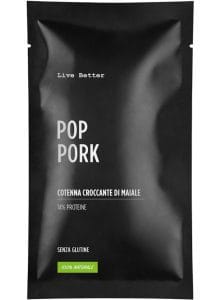
2) Pork rind
3) Pork feet (even the shank, but with the rind!) and chicken feet
4) Nerves
5) Chicken skin
6) Fish skin
7) Albumen
8) Bone broth
HOW MUCH COLLAGEN TO TAKE PER DAY?
The study shows that a 70 kg person would need 10 g of glycine if we make
10 divided by 70 we get that 0.14 g of glycine per kg of weight is missing.
So multiplying your weight by 0.14 you will find the amount of glycine
to you need according to this study. However, you have to use your fitness weight, as the fat
present in our body does not contain much collagen.
My example: 54 x 0.14 = 7.56 g of glycine.
Our collagen contains 25% of glycine, so now we divide the grams of glycine by 0.25.
My example 7.56 : 0.25 = 30.2 g of collagen
To recap, the calculation to be done: "SHAPE weight in kg" multiplied by 0.14 divided by 0.25.
My example: 54 x 0.14 : 0.25 = 30.2 grams of collagen to be taken daily to supplement the
glycine needed by our body.
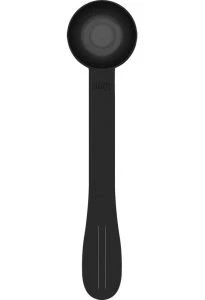
1 scoop contains about 4 grams.
We also take in glycine through the other foods we eat, but this is already taken into account in the study.
CONCLUSIONS
After reading this study, I started working on a powdered preparation to make a strawberry/berry jelly (so we also incorporate the vitamin C essential for collagen production). ☺
I would like to close by quoting a sentence from the study that really struck me: the body of people with a low-protein diet adapts to this scarcity of amino acids by reducing protein turnover.2 The body of people with a low-protein diet adapts to this scarcity of amino acids by reducing protein turnover. Reducing protein turnover means running the risk of having old, spoiled, and malfunctioning proteins in the body.
Love protein! Our bodies need them to renew themselves. And remember: animal proteins are called "noble" because they contain the proportions of essential amino acids needed by our bodies.
If you would like to learn more about protein, I would like to point out two direct
1) Protein and amino acids with Dr. Emanuele Giordano click here
2) Carnivore diet with Dr. Cristina Tomasi click here
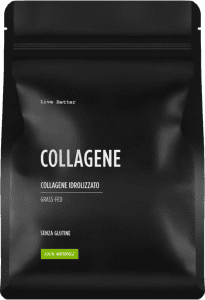
100 g of Live Better collagen contains the following amino acids.
(minimum quantity - maximum quantity)
Alanine 8.20 to 9.15 g
Arginine 6.97 - 7.78 g
Aspartic acid 5.28 to 5.89 g
Glutamic acid 9.25 to 10.33 g
Glycine 22.06 to 24.63 g
Histidine* 0.69 to 0.77 g
Hydroxyproline 10.21 to 12.48 g
Hydroxylysine 0.5 to 1.2 g
Isoleucine* 1.41 to 1.57 g
Leucine* 2.7 to 3.01 g
Lysine* 3.39 to 3.78 g
Methionine* 0.82 to 0.91 g
Phenylalanine* 1.79 to 1.99 g
Proline 12.8 to 14.29 g
Serine 3.07 - 3.43 g
Threonine* 1.68 to 1.87 g
Tyrosine 0.47 to 0.53 g
Valine* 2.08 to 2.33 g
BIBLIOGRAPHY

Good morning , after reading how to get how much collagen to take based on the shape weight , your formula I already knew , but it does not say how to get the SHAPE WEIGHT which is what I would like to know thank you .
It is not that simple, there are online tools but they are not good because they do not take muscle mass into account. To know the correct fitness weight one would have to do an analysis that measures muscle mass such as a BIA or even better a DEXA scan and have an expert interpret the result. A less scientific way is: how much did you weigh in your 20s? If you were not overweight, that weight approximates your fitness weight, always taking muscle into account though: maybe your muscle mass is very different from when you were in your twenties.
Great information thank you