




















 EBOOK
EBOOK Insights
 Blog
Blog Tutorials
 GRASS FED
 training
 LIVES
LIVES
COOKWARE: WHICH ONES TO USE
Whenever I tried to delve into the subject of cookware, I could never really understand the issue and so gripped by despondency I would abandon the research.
Then by chance I met Marcello Gasparetto owner together with his brother of the store Gasparetto 1945. Talking with him I finally understood so many things and so I asked him to make a live. Given the time Marcello has taken to help me get clarity on cookware I think it is incumbent on me when I talk about a product he sells, to put the link to his site. Marcello has two appliance stores, one in Vicenza and one in Rovigo. He also sells online. Marcello has a real passion and extensive expertise for high-quality kitchen products.
Marcello has created the code LIVEBETTER to get 7% off everything, including promotional products. To access his site just click here
Although I talked with Marcello for hours I still have several doubts, however, I finally understood some basic points:
1) Different materials give different firing characteristics. So each material is optimal for a certain type of cooking. For example: on cooking a beautiful steak we will need high temperatures in order for the Maillard reaction to take place and for that wonderful golden crust to form on the surface of the meat. It will therefore be necessary to use materials that have no problem with high temperatures, namely cast iron or iron.
2) When we consider the cost of a pan, it is also necessary to evaluate its durability. Medium-quality nonstick pans should be replaced every 4 to 5 years (low-quality ones even 2/3 years...). Let's do two calculations: if we assume that we cook for 50 years (30 to 80 years) that means we should replace them 10 times. A cast iron or iron skillet, on the other hand, lasts a lifetime, and a 26 cm iron De Buyer skillet costs about 50 €, while a Staub vitrified cast iron one costs just over 100 €.
3) Nonstick pans were born to cook with less fat. So if like me you use fat for cooking, it is not necessary to have a nonstick pan. Sure, cast-iron or iron pans require a little extra care, but the end result of the dish will pay off handsomely!
4) Nickel: in the live On nickel allergy with Dr. Veronica Santalucia, I understood that what is called "nickel allergy" is caused by an accumulation of nickel in our bodies. Most of the stainless steel used to make cookware is 18/10, which means it contains 18% chromium and 10% nickel. During cooking there is a release of nickel. So it is not suitable for those who are allergic to nickel, but since the condition is due to a buildup of nickel in our bodies, I would say it would be better for anyone to avoid stainless steel. Important specification: chromium is added to steel to make it resist rust and nickel to make it shiny. There is a stainless steel without nickel the 18/0. The official names are AISI 304 (for 18/10 or 18/08 steel) AISI 441 (for 18/0 steel). To this link you can read a comprehensive article on steel. As for stainless steel cutlery, there are no release problems because we use it at room temperature.
On the internet you read that nonstick, cast iron, iron and vitrified cast iron pans contain nickel. It is not known to me but to be sure I wrote to the manufacturers. I will update you! And now let's get started! I will tell you what I have learned about each material and at the end you will also find a summary table. On certain issues I can't think well without an Excel table!
The pots and pans non-stick are super convenient: nothing sticks while you cook, and even when you wash them, food residue comes right off. This is all thanks to the nonstick coating, which is PTFE. PTFE is a plastic material. A few years ago a scandal emerged involving Teflon (which is the trade name for PTFE made by Dupont). I won't go into that now, however, it seems that the real problem was not Teflon itself but PFOA. PFOA can no longer be used today, but the industry has replaced it with other materials, one of which is GenX that seems to be harmful to our health anyway. It seems that the danger associated with PTFE is only above 230°C because it creates gases that are harmful to the lungs. I have not delved deep enough to tell you whether it is true that it is harmful ONLY above 230°C. If you want to here find an interesting AIRC article: nonstick cookware does not cause cancer.
During the live with Marcello so many of you recommended the pans to me. CookingHealthy from Ross that are nonstick without PTFE, PFOA, PFAS, GENX, BPA, and nickel. Ross will explain more about the materials used in the nonstick coating of her cookware in an upcoming direct.
Today there are cookware where the nonstick coating is composed of a mineral alloy, which is often commercially referred to as "ceramic." In America, the first brand to use this coating was GreenPan. The material used by GreenPan for the nonstick coating is Thermolon: through the Sol-Gel process on the surface of the cookware, a coating is obtained mainly from silicon dioxide. GreenPan claims that its cookware is "completely free of toxins," but in 2019 there was a class action lawsuit in America for false advertising, as the Thermolon's patent states that silane, aluminum oxide, tetraethyl orthosilicate, methyltrimethoxysilane, and potassium titanate-substances believed to be harmful to health-are also used in its production.
I have a feeling that there is little transparency regarding the materials used in nonstick coatings, and so I wonder: do we really need them? Are there alternatives?
From what I learned thanks to Marcello, the answer is yes! My main interest was finding "clean" cookware and I realized that it is those made of iron, cast iron, glass/glass ceramic, and Fusiontec. Then thanks to Marcello I also realized the importance of the appropriateness of the material to the type of cooking I need to do. And this is where it gets a little more complicated. ☺
The pots and pans in glass Are delicate, if they fall, they break. They also have no nonstick capacity, so I am considering buying them only for boiling pasta. Although given my lack of delicacy, I'm afraid they would last me a short time... Glass-ceramic pans are a more temperature resistant and I think also shock resistant. These materials are perfect for the oven.
The iron through a process of oil polymerization (called "seasoning") naturally becomes nonstick. So far, so wonderful, but beware: iron pans cannot be put in the dishwasher and cleaning them is a bit of a slog: the perfect procedure involves using a spatula to remove the crusts (yes, we can scrape them off with an iron spatula and nothing happens!) then salt them and finally grease them with a tiny bit of oil so that they don't rust. Here find a tutorial. They can also be washed by hand with hot water, but without detergent because it would remove the polymerized layer of oil (however, Marcello told me that a drop of detergent he uses and nothing happens). After washing them, they should be dried very well (you can put them back on the stove for a few seconds) and then a light coat of oil should be applied. De Buyer Is the leader in iron skillets. The iron skillet is great for browning, frying, browning and caramelizing food.
La vitrified cast iron is an iron material, so it is a safe material. Since it is "enameled" with glass (another safe material) and can be washed in a dishwasher (however, not those with wooden handles) or by hand with water and detergent. Pans, grills and griddles, should be washed without excessive fury so as not to remove the "nonstick" patina (similar to that of the iron skillet) that forms by fat polymerization. Unglazed cast-iron pans such as the Lodge should be oiled before storing, glazed ones should not.
When I first cooked meat in the cast-iron skillet, I was speechless, and so although it is a bit of a slog to wash it, I decided that I wanted to own an iron skillet as well! And so I purchased a De Buyer 32 cm. Can't wait for it to arrive!!!
To summarize: iron rusts easily, cannot be put in the dishwasher , nor washed with detergent, and must be oiled before storage. However, due to the polymerization of the oil, the pan becomes nonstick. It cannot be used with acidic foods such as tomatoes. Vitrified cast iron (Staub and Le Creuset) is more practical: than iron: it does not rust, it can go in the dishwasher, and it does not need to be wiped with oil before storage. It becomes slightly nonstick with use, but because the oil cures with glass, it is not as effective as on the iron pan. It has no problem with acidic foods. With cast-iron and iron pans you do the same cooking: frying, quick cooking of meat and fish, egg dishes (here it takes a little more dexterity with cast-iron ones).
Le cocotte cast iron are perfect for slow cooking such as stews, soups and ragouts because they have a special lid that promotes a constant steam cycle, perfect for this type of cooking. The cast iron pan, on the other hand, is similar to the iron pan, so it is perfect for frying and quick cooking of meat and fish. Cast iron has excellent heat preservation properties and heats evenly, ensuring even cooking. It takes longer to heat up, though, because like iron it is not a good conductor. Cast iron is also perfect for steak pans. The ribbed ones allow liquids to evaporate so it is perfect for meats. The smooth ones are better for fish and vegetables.
Another safe material is the ceramics. The Sublime and Delight products of Emile Henry have a
innovative technology that allows the cookware to be very versatile as it reaches high temperatures in less than a minute (this is not the case with cast iron and iron), has efficient heat distribution and excellent heat resistance (while cooking it can be faded with a cold liquid without any problem). The high-strength enamel prevents food from sticking, makes it easy to clean, does not retain odors, and does not scratch even with metal utensils. The cooking is similar to cast iron in cocotte but weighs MUCH less, making it more manageable. Also, there is no presence of metals. Emile Henry also makes excellent ceramic baking dishes. There are also special pieces x bread, pizza, cakes, ...
Special mention should be made of the cookware Fusiontech: iron structure on whose surface (the one in contact with food) an alloy of 20 minerals is fused. It combines the heat preservation of cast iron, the scratch resistance of glass, the non-corrosive nature of stainless steel, and the even baking of aluminum. There is no divesting and they are excellent for almost all types of firing. Guaranteed for 30 years. (Here you see the difference with nonstick cookware with material
ceramic: no one will give you a 30-year warranty).
If you do not have a nickel allergy, perhaps it would make sense to have a steel pan to do "sauté" cooking (high temperatures and food being moved around in the pan often). An outstanding pan for doing this is the wok Apollo by Demeyer with 7 layers of steel and aluminum that provide optimal heat distribution over the entire surface of the pan, ensuring even cooking.
Other materials suitable for jumping are: aluminum, copper, and nonstick pans. Here are my thoughts on these materials:
Nonstick: definitely the most "technological" cookware but with some doubt about the possible
health-related consequences of
- gases released at high temperatures
- Non-stick coating that peels off and is swallowed
- when the coating comes off, the food comes into contact with the aluminum underneath, which is not pure (the coating only comes off in low/medium quality cookware. If we buy high-end brands such as Scanpan TechnIQ, Woll o Swiss Diamond we won't have these problems.)
Aluminum (aluminum is pure in these pans) used mainly in restaurants because: they are light (thus handy), heat up quickly (thus use less energy), last forever, and are cheap. Aluminum has a release, but although it seems to be very very low, I prefer to avoid it. Angels Is the leader.
Copper are beautiful, but they require a lot of care. In addition, the inner surface is often tinned, or trilaminate (with the surface in contact with the food made of steel, thus releasing nickel). Periodically the tinned ones need to be stagnated, so the question arises: where does the tin go? Do we eat it? Since there are no CERTAIN answers, I prefer to avoid it.
Finally, I think it is also worth mentioning titanium, which is a nontoxic metal, highly tolerated by the human body and very resistant to corrosion and high temperatures. There is an Italian company Tritania which produces an excellent trilaminate product: steel (on the bottom), aluminum (in the middle) and surface (the one in contact with the food) 100% pure titanium. They have a high cost but never wear out and always remain intact, in fact they have a 30-year warranty. The pure titanium coating does not release toxic substances, does not create allergies (nickel free), and is not afraid of high temperatures. Finally, it has a slight natural nonstickness that can be made the most of by properly dosing the cooking temperature. If you sign up for the newsletter you get a code for 5% discount.
Very important: cookware that works with induction works on all types of stoves.
I did not know this and I think it is invaluable information given the cost of some cookware. Maybe in X years I decide to put induction on and the cookware will still work!
At this point, after all this information and reflection, the question arises: I which
pots I decided to buy?

24 cm vitrified cast iron frying pan with wooden handle Staub pwith a wooden handle (most cast-iron pans have cast-iron handles, and since I am not used to handles that get hot, I would SAFELY get burned!). Since it has a wooden handle, it cannot be washed in the dishwasher and cannot go in the oven (I realized this later, in hindsight I would have gotten it with the cast iron handle)

Pot 20 cm and casserole 16 cm Fusiontec for boiling pasta, rice, cooking porridge and I think it is also perfect for making cooked apples. The material is amazing: the mineral layer is MELT with the metal the pot is made of so it can't come off, which is why they are guaranteed 30 years! I'm curious to bake in them to see how they perform.

Marcello gave me a super gift: the Bistrot TechnIQ from Scanpan that I will use for sautéing and for dishes like chicken curry. It is nonstick so it has a PTFE coating, but used in the correct way (not exceeding 230°C) it should have no problems. Also being a very high quality product there are no problems with the coating coming off. In fact, they are guaranteed for 10 years. It is completely different from other anti-adhesives I have had: it is nice and heavy and the inside is wrinkled.

De Buyer 32 cm iron skillet, which I will use to cook eggs and do the Maillard reaction to meat! It is also great for frying but I never fry. Maybe I'll start!!! 😉 I can't wait for it to come in to do the seasoning-it will turn mirror black! How fascinating this process is!

Finally, I want to get two cocotte: one giant one for making ragu (and various stews) and the other wide and low (diameter 28/30 cm) for cooking tomato sauces that I simmer a lot so that lycopene (a powerful antioxidant) develops. I would have loved the ceramic cocotte Sublime by Emile Henry, but unfortunately it does not go on induction. The Delight on the other hand works but does not have the size I need. However, I will wait for the arrival of the Fusiontecs before purchasing them.
Having said that, I really thank Marcello from the bottom of my heart for everything he has explained to me-I have much more clarity in my head and above all I have realized that the pot can make a huge difference in the success of the dish.
On the next page you will find the summary table.
That's a lot of information it took me a while before I could get some clarity in my head. Then I think the ultimate clarity I will have only when I start using the various pots. So there will be an update of this document.
P.S.
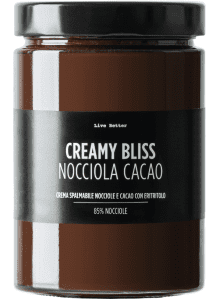
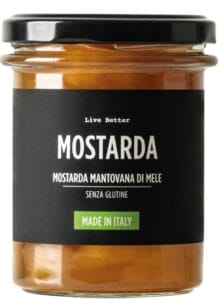
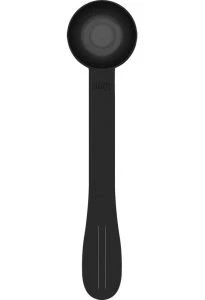
In case you place an order on Marcello's site, I recommend that you also purchase this genius: Mini Supoon from Dream Farm! It's a super handy silicone spoon for cleaning up the edges of glass jars of jam, Creamy Bliss, mayonnaise, peanut butter, etc.

| Brand | Material | Maximum temperature | Non-stick | Ideal for | Stoves | Surface | Acidic foods | Dishwashers | Soapy water | |
|---|---|---|---|---|---|---|---|---|---|---|
| Pyroflam, Vitromax, Pyrex Flame | Glass ceramic | Do not put on dry fire | No | Boiling dough. Perfect material for the oven | No induction | Smooth | Yes | Yes | Yes | |
| De Buyer | Iron | He has no problems | A patina forms that makes it naturally nonstick | Fritters, all egg, meat and fish products with fast cooking (Maillard reaction) | It works on everything | Become smooth and shiny | Yes | Ni* | Ni* | |
| ScanPan TechIQ | Aluminum + non-stick | 230 °C | PTFE | Cooking with little fat and for sautéing because the base is aluminum and gets hot immediately | There are two versions, yes on induction and also goes on fire | Dull and wrinkled | Yes** | Yes** | Yes | |
| SwissDiamond | Aluminum + non-stick | 230 °C | PTFE | Low-fat cooking and long cooking. They are quite heavy | There are two versions, yes on induction and also goes on fire | Matte and smooth | Yes** | Yes** | Yes | |
| Woll | Aluminum + non-stick | 230 °C | PTFE | Low-fat cooking and long cooking. They are quite heavy | Matte and smooth | Yes | Yes | Yes | ||
| Fusiontech | Iron + smelting of 20 minerals | He has no problems | No | It combines merits of cast iron and iron, is lighter and you can use it for everything | It works on everything | Mirror | Yes | Yes | Yes | |
| Visions 6 | Glass | Beware of direct flame and temperature changes | No | Boil the pasta | No induction | Smooth | Yes | Yes | Yes | |
| Staub | Vitrified cast iron | He has no problems | No, but it doesn't stick like steel | Long, slow cooking for cocottes. The frying pan, on the other hand, is like iron for frying, egg dishes, fast cooking meats (Maillard reaction) | It works on everything | Dull and wrinkled | Yes | Yes | Yes | |
| Le Creuset | Vitrified cast iron | He has no problems | No, but it doesn't stick like steel | Long, slow cooking for cocottes. The frying pan, on the other hand, is like iron for frying, egg dishes, fast cooking meats (Maillard reaction) | It works on everything | Glossy and smooth | Yes | Yes | Yes | |
| Demeyere | Multilayer steel | He has no problems | No | The sauté pans | It works on everything | Satin and smooth | Yes | Yes | Yes | |
| Lambs | Aluminum | He has no problems | No | The 3 mm pans ideal for skipping | There are two versions, yes on induction also goes on fire | Satin and smooth | Yes | No | No | |
| Emile Henry lines Sublime or Delight | Ceramics | No | No, but it doesn't stick like steel | Long, slow cooking for cocottes. Special pans can also be used for bread, pizza and cakes | Fire (Delight line also on induction). Ok also oven | Smooth | Yes | Yes | Yes | |
| Tritania | Titanium | He has no problems | Low adhesiveness | Very healthy, nickel free | It works on everything | Satin and smooth | Yes | Yes | Yes |
All of these pans have no porous surface
*Washing with sponge must be careful and not remove the polymerized oil layer that imparts natural nonstickiness
**Washing them by hand makes the coating last longer. If it has the aluminum bottom exposed in the dishwasher it may oxidize (it's just an aesthetic "problem")


Leave A Comment