































 EBOOK
EBOOK Insights
 Blog
Blog Tutorials
 GRASS FED
 training
 LIVES
LIVES
IS IT NECESSARY TO TAKE COLLAGEN?
Some say yes and some say no, how to untangle? By trying to understand. That way we can make an informed decision.
Why is it that as we age, our skin loses tone and our bones weaken?
Skin and bones are largely made up of collagen, and from the age of 20, our bodies produce 1% less collagen each year. So less collagen production could be the cause why our skin loses tone, our bones weaken, our joints creak, nails and hair thin...
But all this decay, is it really inevitable?
Glycine a semi-essential amino acid?
Researchers at the Institute of Cell Metabolism have found (1) that our bodies are unable to produce enough glycine, it seems that a 70 kg person has a deficiency of 10 grams per day!!!
Glycine is the most abundant amino acid in collagen, so if our body does not have enough glycine, it will not be able to produce enough collagen. And with little and poor collagen, our body cannot be healthy because collagen is like the glue that holds the body together. In fact, collagen is the most abundant protein in the human body; it is found in skin, bones, cartilage, tendons, ligaments and muscles. Just think that collagen makes up 75% of the dry weight of skin and 30% of that of bones!
Glycine essential for collagen and glutathione
Every day our body breaks down and then rebuilds some of the protein it is made of, including collagen. To make a protein, the body combines several amino acids. The protein collagen consists of 30% of the amino acid glycine, so it is now clear that if glycine is missing, the body will not be able to make new collagen.
But there is more: glycine is essential for the production of glutathione (2), one of the most powerful antioxidants in our body. So if we don't have enough glycine we won't be able to produce enough glutathione to fight free radicals and thus aging. So do you see how important it is to have enough?
Because glycine can be produced by our bodies, it is considered a nonessential amino acid, but there are several researchers who have been saying since 1991 (3) that it is actually a conditionally essential amino acid. But what does conditionally essential mean? That our body can produce it but not in sufficient quantity and therefore it is necessary to introduce it through food as well.
Dietary intake of glycine
The foods richest in glycine are those that contain collagen: gelatin, pork rind and pigs' feet, ribs, chicken skin and feet, fish skin, bone broth, and collagen-rich cuts such as tail. Gelatin, what we call isinglass, is also very rich in collagen. So to provide our bodies with the missing glycine, we should eat these foods every day. Or, there is an easier solution: take collagen powder that contains as much as 25% of glycine!
Given the importance of glycine to our health, and collagen being the most glycine-rich food, there are researchers who say that collagen should become the fourth macronutrient, along with protein, carbohydrates and fat.
What are the benefits associated with more efficient collagen production?
To date, more than 20,000 studies on collagen have been published, showing that collagen supplementation may be associated with the following possible benefits:
More hydrated and tightened skin (be careful though, it doesn't work miracles)
Stronger bones
More efficient joints
Stronger tendons
Stronger nails and healthier hair
And there is another benefit that has not yet been documented in the scientific literature, but has emerged from our community: improved intestinal transit.
What are the benefits linked to a higher availability of glycine (2)?
The possible benefits linked to a greater availability of glycine seem to be:
Increased production of glutathione
Protection of the cardiovascular system
Control of inflammation
Improved sleep
Liver protection
Improving metabolic health and diabetes
Decreased protein glycation.
IMPORTANT
I want to emphasize that none of these benefits are certain. The only health claims that are proven and officially recognized are those published on the EFSA website.
FREQUENTLY ASKED QUESTIONS
But how much collagen should we take?
Most experts talk about 20 grams per day. I take more, however, because based on the study (1) that showed glycine deficiency, the amount my body needs is 30 grams, which gives me 7.5 glycine. Ideal weight x 0.14 : 0.25 is the formula I used (you can also find it on the packaging of our collagen). Starting from our weight, it allows us to determine the individual optimal amount.
How is collagen taken?
It is so simple, just dissolve it in a liquid: a hot or cold drink, a smoothie, in eggs before making an omelet, in a soup, in the dough of a baked good, or in yogurt. You can bake it nothing happens. You can also take it by making the stratospheric kaiserschmarren Live Better with 46 g of protein!
What does it taste like?
If you have already tried collagen you may have had a bad experience: there are some products on the market that really taste unpleasant. I am hyper sensitive to odors, so some collagens I just can't take, just the smell makes me nauseous. At first ours was not really the best tasting either, but after a long search I finally managed to find a collagen that was really tasteless. Trust me, give it a chance, it will amaze you!
How long should it be taken for?
Our body produces collagen and glutathione every day, so I take collagen every day for the rest of my life.
Should collagen intake be discontinued as with other supplements?
If the product you take is 100% collagen like ours, there is no need to stop taking it because our bodies produce collagen every day and therefore need glycine every day.
Are there any contraindications?
No contraindications are reported. However, there are some people who should be careful:
- People sensitive to histamine
- People with hyperoxaluria
To learn more, read here
Does collagen improve intestinal transit?
Although it is a benefit that is not yet talked about, many people report that taking collagen has improved their intestinal transit after years of constipation. To be fair, there are also people who report diarrhea as a result of taking collagen. I wrote an in-depth paper on this topic, you can find it at this link.
When should it be taken?
I take it in the morning so I don't think about it anymore. It's okay to take it in the evening, too, because glycine has beneficial effects on sleep.
What collagen to take?
There are 3 types of collagen: bovine, porcine and marine. There is no such thing as vegetable collagen because collagen is a protein found only in animals. In terms of amino acid supply, bovine, porcine and marine collagen are quite similar, so based on what do you choose? I chose based on sustainability: the Live Better collagen comes from the skin of cattle raised on pasture so free to live naturally. When cattle are raised on pasture they fertilize the soil creating fertile soil rich in microorganisms. Healthy soil is the main reservoir of carbon dioxide on our beautiful planet. The truth is that agriculture depletes the soil, while ruminants regenerate it. If you want to learn more about this fascinating topic, I recommend a wonderful documentary on Netflix, Kiss The Ground. For me it was enlightening.
Pig collagen is the cheapest because there is so much availability. It's very similar to the composition of human collagen, the only problem is that pig farming is not the most sustainable, so again it's a no-no for me.
Marine collagen is the most different from ours in terms of amino acid composition and for the most part is produced from farmed fish. So for me it's a no-no.
Is it true that marine collagen is more effective?
I've heard that, too, but I couldn't explain what the reasons might be. So one day I decided to look into it and found out that it was not true. There were a lot of scientific studies that claimed that marine collagen was more bioavailable and therefore was absorbed 1.5 times more. The problem was that none of these studies cited the source. Hmm, strange-when a study makes such a claim it always has to cite the study from which it came. I kept looking and finally found a study that cited the source (4). And do you know what it said?!!! That marine collagen absorbs 1.5 times more water than mammalian collagen. So the information is wrong: marine collagen is not more absorbable, it just absorbs more water. Why do they keep repeating this lie? Maybe they need it to justify why it costs more.
What does hydrolyzed collagen mean?
Collagen and gelatin (isinglass) are the same thing. What differentiates them is the process of hydrolyzation that collagen undergoes and gives it a lower molecular weight. Hydrolyzation cuts the collagen molecule into smaller molecules. It is basically as if collagen were "predigested" jelly (in fact, in our digestive system, proteins are "cut" in order to be absorbed) and this makes it more easily digested and absorbed by the gut (applies to all hydrolyzed proteins, not just collagen).
Why do some experts claim that collagen is useless?
The rationale they bring is that when we take collagen it is digested and individual amino acids are absorbed, and therefore it is useless because we can get the same amino acids from other foods. I hypothesize that they ignore the fact that our body cannot produce enough glycine for its needs and that taking collagen (the absolute richest food in glycine) provides our body with this very important amino acid.
Why do they say that collagen is a protein with low biological value?
The biological value of proteins is determined by their content of essential amino acids. If they contain all of them and in the right proportions then they have a high biological value. Collagen does not contain tryptophan and therefore is not a complete protein. However, not all proteins that our body synthesizes contain all the essential amino acids. For example, when the body synthesizes collagen, it does not need tryptophan. When we take collagen we provide our body with exactly the amino acids it needs to make new collagen.
Can collagen be the only protein we take in daily?
Absolutely not, because it does not contain all the essential amino acids. Collagen provides exactly the amino acids needed for collagen synthesis, but our body has to synthesize more than 20,000 types of proteins and therefore needs all the essential amino acids. Foods that contain all the essential amino acids in the right proportions are: meat, fish, and eggs.
Should collagen be counted in the daily protein intake?
Of course! As explained earlier, collagen provides the amino acids needed for collagen synthesis, which is the most abundant protein in the body and therefore should be considered in the daily count. Be careful though: collagen is not enough, you must also supplement other proteins that provide all the essential amino acids. We recommend taking no more than 25/30% of your daily protein intake from collagen.
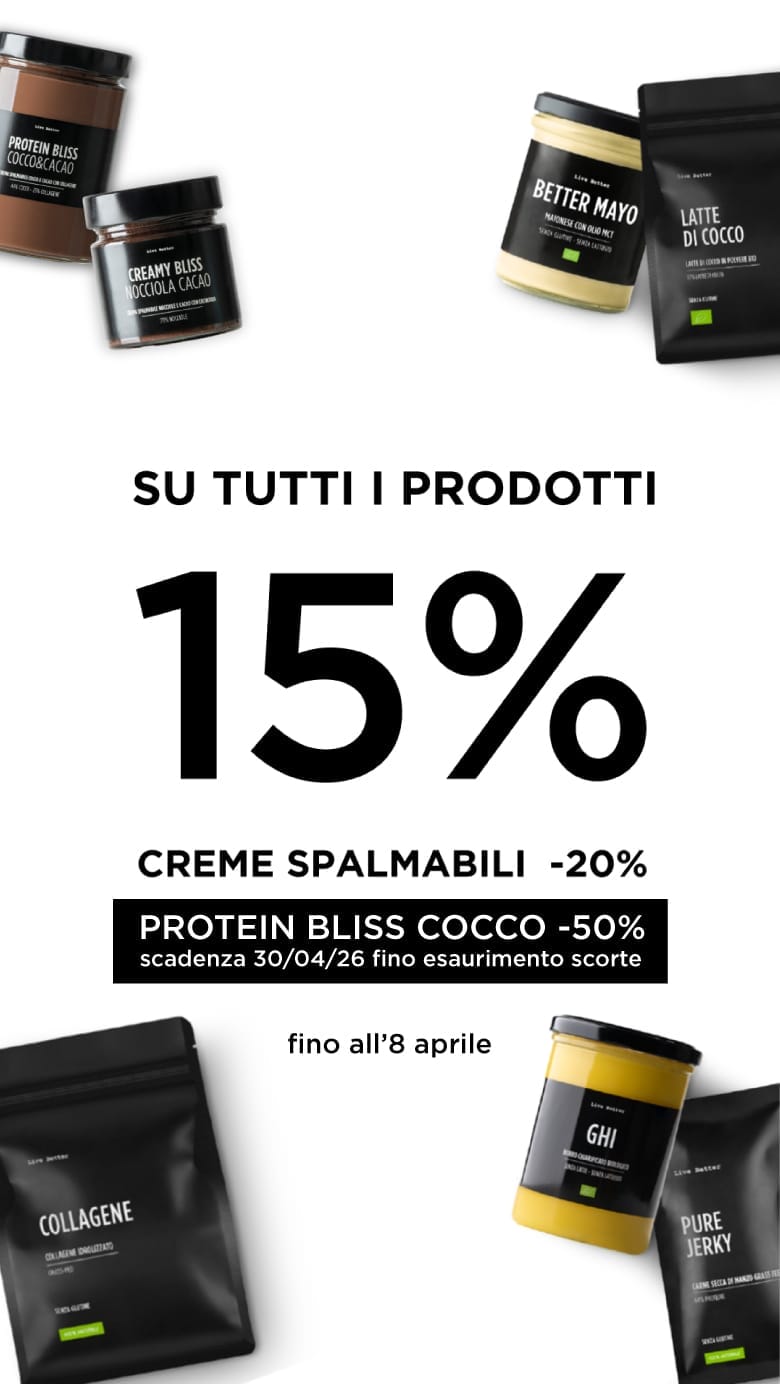
In the end I believe that the best way to know whether something works or not is to try it. Try taking at least 20 g of collagen a day for 2 months (three would be even better) and then observe whether it has benefited you. The investment is acceptable: €1.1 per day for 20 g of collagen (buying it with the 15% discount, which is the discount we do every month: one promo at the beginning, one in the middle and one at the end of the month).
BIBLIOGRAPHY
- A weak link in metabolism: the metabolic capacity for glycine biosynthesis does not satisfy the need for collagen synthesis https://pubmed.ncbi.nlm.nih.gov/20093739/
- Dietary Glycine Is Rate-Limiting for Glutathione Synthesis and May Have Broad Potential for Health Protection https://www.ncbi.nlm.nih.gov/pmc/articles/PMC5855430/
- The glycine story https://www.researchgate.net/publication/21106103_The_glycine_story
- Development of fish collagen in tissue regeneration and drug delivery https://www.sciencedirect.com/science/article/pii/S2666138122000317


How many scoops should be taken per day?
Lost about 70 kg
Hi Anna, a woman can take 20 to 30 grams per day. Collagen should not exceed 25/30% of protein intake.
Perché il collagene live better è di tipo 1 e 3 e non, anche, il 2?
.mu I unsubscribed from the newsletter by mistake.
You can re-enroll
Can I add it to the protein shake in the morning?
Yes of course
I have no thyroid, so a hypothyroid. I take fasting Euthyrox in the morning.
Can it interfere with and inhibit the effect of the drug , taking collagen in the morning?
Hi Cristina, you need to ask your doctor. Our collagen is a simple protein, it contains nothing else