


























 EBOOK
EBOOK Insights
 Blog
Blog Tutorials
 GRASS FED
 training
 LIVES
LIVES
On Sunday, February 8, 2026, yet another collagen supplement was launched with additional ingredients: vitamin C, hyaluronic acid, etc. Therefore, I decided to write an in-depth review since I have often been asked whether:
it makes sense to take on these kinds of products
take vitamin C improve collagen synthesis
Need vitamin C to absorb collagen
BRIEF SUMMARY (I'm going to use the product launched yesterday as an example because so many people have asked my opinion about it)
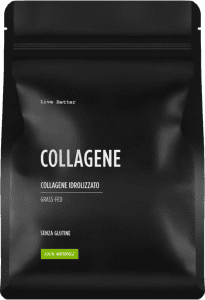
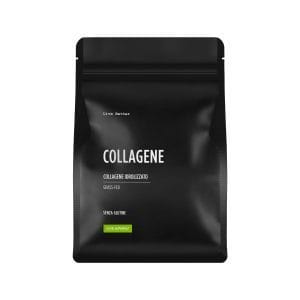
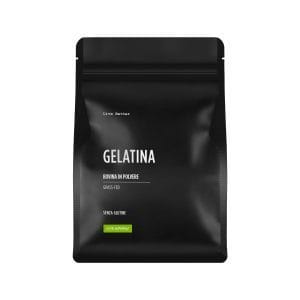
Live Better collagen is pure because I consider it a food, not a supplement. Using pure collagen has many benefits:
- It can be dosed according to our personal needs
- Can be cooked and used as an ingredient in tasty recipes
- Does not require discontinuing its intake as is often the case with supplements
- It can be used by everyone, including pregnancy and breastfeeding. The added ingredients in some supplements can be problematic, for example, vitamin C can create discomfort for those with reflux or gastritis
First observation: collagen supplements that contain other ingredients have much higher costs. A dose of the product launched yesterday costs 2.3 € and contains 10 g of collagen. The same amount of Live Better collagen costs only €0.65. This new product costs 254% more!
Is the higher cost justified by greater benefit? The only ingredient scientifically proven to have effects on collagen production is vitamin C. The newly launched product contains 100 mg of synthetic vitamin C. For comparison: the supplement of vitamin C which I use contains 200 mg of natural vitamin C at a cost of 0.14 €.
Is it necessary to supplement vitamin C? The recommended daily dose is: women 85 mg, men 105 mg. A diet of fruits and vegetables provides the necessary vitamin C; in fact, just 1 green kiwi contains about 85 mg of vitamin C. Fun fact: Yellow kiwis also contain more than twice as much vitamin C, but they are MUCH more expensive, here in my home they cost 50% more than green ones!
Is vitamin C needed to synthesize collagen? Yes, it is absolutely necessary. In fact, in cases of severe and prolonged vitamin C deficiency, scurvy, a disease caused by unstable collagen production, occurs.
More vitamin C = more collagen? There is no scientific evidence. More vitamin C does not increase or improve collagen production.
Do you need vitamin C to absorb collagen? No, collagen is a protein and only needs a good digestive system to be absorbed: adequate stomach acidity and functioning enzymes.
Finally, I think it is useful to make an observation about the wording “certified grass-fed collagen” on the new product website: the EU regulation on primary production and labeling does not provide an official definition of grass-fed, so the statement “grass-fed” on the packages has no binding European legal standard. Collagen producers issue self-certifications regarding grass-fed, but these documents are not “certifications.” A certification is an official document issued by a certifying body. The only official European certification regarding grass-fed, is the protected geographical certification, PGI, regarding the’ Irish Grass Fed Beef, as you can read in the document this certification refers only to “fresh meat (and offal)” so no collagen.
Live Better clearly holds the grass-fed self-certification from the manufacturer of our collagen, but we have never reported it as “certification” since it is only a self-certification from the company, not a document issued by a certifying body.
If you have questions or want to tell us how you feel about this topic, please comment at the bottom of this article. Your email will not be shown on the site, we just need it to send you any responses to your comment.
WHY LIVE BETTER COLLAGEN IS PURE
Our species has evolved for more than two million years by consuming not only the muscles of the animal, but also the collagen-rich parts: joints, tendons, skin. These cuts are different from other proteins because they are very rich in glycine. Today, these parts are no longer consumed, and collagen powder is a convenient and practical solution to compensate for their deficiency. For this reason, Live Better collagen is pure: we consider collagen a food, not a supplement. And foods must be pure.
In addition, pure collagen has numerous positive sides:
- Can be dosed according to individual needs, we are all different so we do not need the same dose of collagen
- Can be cooked, not afraid of heat
- can be used as an ingredient to create super nutritious versions of dishes we love, such as my beloved kaiserschmarren Live Better version, which contains as much as 46 g of protein and 2.8 g of leucine!
- can be taken by everyone, even during pregnancy and breastfeeding. When other ingredients are added there may be people who do not tolerate them well. For example, those who suffer from reflux or acidity might have problems with a supplement containing vitamin C.
- It can be taken all the time, without interruption. Sometimes collagen supplements with other ingredients need to be discontinued for a period of time. This need does not depend on the collagen but on some ingredients in the mixture.
ATTENTION TO COSTS
Collagen supplements with other ingredients cost much more than pure collagen. Let's look at the cost of the newly launched product:
Cost 69 €* for 330 grams
Recommended dose: 11 grams, so the package contains 30 servings
11 grams of the product contains 10 g of collagen
So 10 g of collagen costs €2.3
1 kg of Live Better collagen costs 65 €*.
So 10 grams cost €0.65
2.3€ vs 0.65€, means the extra 254%.
If we want to look at it another way: with 2.3 € you would have 35 g of Live Better collagen, instead of 10 g, 3.5 times more.
*prices net of discounts
However, the other product also contains other ingredients, so it is not an equal comparison. Let's look at vitamin C: the new product contains 100 mg of synthetic ascorbic acid. I take a product that contains 200 mg of natural vitamin C at a cost of €0.14. I specify that ascorbic acid from natural sources costs MUCH more than synthetic ascorbic acid, even if liposomal.
ARE THE OTHER INGREDIENTS EFFECTIVE?
At this point, however, it is normal to ask: if the other ingredients increase collagen production, it may make sense to pay more.
The ingredients we usually find in these products are almost always the same: hyaluronic acid, silica, copper, zinc, resveratrol, etc. How do we know if these ingredients really have an effect on collagen production?
EFSA, the European Food Safety Authority, helps us. If a substance has been shown through robust scientific evidence to have a certain effect on the human body, then EFSA approves a “health claim.”.
Health claims can be viewed here.
None of the ingredients usually used in collagen supplements have been shown to be effective in collagen production, except for one: vitamin C.
This is why vitamin C is always found in collagen supplements: its presence allows companies to claim that the supplement has an effect on collagen production.
Be careful, however: health claims must be used in the exact words approved by EFSA, for example, “Vitamin C contributes to normal collagen formation for normal skin function.” Anyone using phrases different from this may face a fine from the AGCM.
IS IT NECESSARY TO SUPPLEMENT VITAMIN C?
Vitamin C is absolutely necessary in collagen production because it acts as a cofactor for enzymes that hydroxylate proline and lysine. Without this passage, collagen is unstable. When due to severe and prolonged vitamin C deficiency, this passage does not occur, scurvy occurs.
Does this mean that taking vitamin C increases/improves collagen production?
No. Most of the robust clinical trials comparing integration vs. placebo are scarce or with inconclusive results. Some evidence suggests that individuals with lower levels of vitamin C benefit from supplementation. (This is often the case: there is benefit from supplementing a micronutrient only when it is deficient. Therefore, there is little point in supplementing if you are not sure you need it).
Since vitamin C has so many benefits my mom always made me supplement it and I still do today.
Vitamin C benefits (approved by EFSA)
Collagen synthesis
Energy production
Functioning of the immune system
Brain functioning
Protection from oxidative stress (it is an antioxidant)
Reduction of fatigue
Vitamin E regeneration
Increased iron absorption
WHICH VITAMIN C TO CHOOSE
I prefer natural vitamin C because in addition to ascorbic acid (the chemical name for vitamin C) it also contains other substances such as flavonoids and polyphenols, which have antioxidant action.
The product I take is the “pure vitamin C” by Dr. Giorgini. The ascorbic acid in it comes from natural sources (rose hips, acerola, camu-camu), so it is not synthetic ascorbic acid obtained by microbial fermentation. After discounts, 200 mg of natural vitamin C costs only €0.14.
WHAT IS THE RECOMMENDED DAILY INTAKE?
Men 105 mg
Women 85 mg
In special situations (see below) a larger amount may make sense
Doses like 1 g per day are rarely necessary, partly because. Above certain doses intestinal absorption of vitamin C decreases and the excess is eliminated with urine.
WHAT FOODS ARE THE RICHEST IN VITAMIN C
Vitamin C content in 100 g of CRUDE food:
Guava 243 mg
Hot peppers 229 mg
Currant 200 mg
Yellow and red sweet peppers 166 mg
Parsley 162 mg
Green sweet peppers 127 mg
Arugula 110 mg
Kiwi 85 mg
Brussels sprouts 81 mg
Broccoli 77 mg
Papaya 60 mg
Oranges 56 mg
Strawberries 54 mg
Bovine spleen 46 mg
Bovine lung 40 mg
Bovine liver 31 mg
Interesting: some animal products also contain vitamin C.
To see the full table click here And select the nutrient “vitamin c (mg/100 g)”
Just 1 green kiwi per day is enough to reach the recommended daily intake for women 85 mg.
CAUTION these values refer to the raw food, unfortunately Vitamin C degrades with heat and oxygen. Vitamin C begins to degrade already above about 70 °C, and the loss increases with higher temperatures or longer times. Instead, exposure to air oxidizes ascorbic acid, which can no longer be used by the body.
Optimal cooking methods to preserve vitamin C:
Steaming, short cooking
Frying pan/wok, short cooking at high heat
Microwave, short cooking and with little water
When food is in direct contact with water, such as during boiling, it increases the “melting” of vitamin C, which is transferred from the food to the cooking water.
SHOULD VITAMIN C BE SUPPLEMENTED?
It only makes sense to do so when there is a real risk of low intake, increased need, or conditions where a “marginal” deficiency is more likely:
Low fruit and vegetable diet
Smokers
Elderly (most at risk for malnutrition, inflammation, and oxidative stress)
Physical and inflammatory stress (for psychological stress it is certainly not needed to supplement it)
Alcoholism or high alcohol consumption
Malabsorption or gastrointestinal diseases
Pregnancy and lactation (if inadequate diet)
Recovery from injury, surgery, or burns (increases collagen production)
CAUTION: As you should always do when deciding to take a supplement, check what contraindications are associated with vitamin C supplementation.


I HAVE PURCHASED YOUR COLLAGEN SEVERAL TIMES BEFORE AND FIND IT TO BE EXCELLENT. I DO NOT UNDERSTAND THE POINT OF THIS STANCE TO DENIGRATE YET ANOTHER SUPPLEMENT PUT ON THE MARKET. THERE ARE NEW ONES POPPING UP EVERY DAY. FOR WHAT REASON TO EVEN WRITE AN ARTICLE AGAINST ONE OF MANY? DO YOU FEAR THE COMPETITION? IF YOU ARE CONFIDENT IN YOUR PRODUCT, I DO NOT UNDERSTAND THE REASON FOR YOUR REACTION TO WHAT HAPPENED.
Hi Samantha,
I am sorry that you interpreted this insight as a denigration of a competing product. Live Better was created to bring awareness, so we simply brought useful information for you to make an informed choice. As we have done on many other occasions. Did you not find the information in this in-depth discussion useful?
Is it necessary to take hyaluronic acid with Live Better collagen?
Hi Isabella, hyaluronic acid has no effect on collagen production. There is some evidence that it might improve hydration but it is very weak. Also because hyaluronic acid is digested into oligosaccharides. It seems that these oligosaccharides could be signal molecules that tell the body to produce hyaluronic acid, but the evidence is very weak.
Good morning who suffers from reflux can take collagen?Thank you
Hi Adele, so many clients who have told us that collagen has benefited their reflux. Clearly I can't give you assurance that it has the same effect with you however I can tell you that there are no contraindications to taking collagen from reflux sufferers. If you try it and have benefits too, let us know!
I do well with vs. collagen, and I use it in the morning (2 MEASUREMENTS) along with eggs/brownie.
as a vitamin C I use colloidal pure, THE PASTES I CANNOT DEGLUTE
WHAT DO YOU THINK ABOUT COLLOIDALIPIDES?
thank you Anis
Hi Anis, I had delved into a colloidal collagen and it seemed VERY unserious. I can't give you feedback on vitamin C though. check how much is in one dose of product. Dr. Giorgini makes rosehip extract powder titrated to 50% in vitamin C, you can dissolve it in a liquid.
Thank you.
I don't mean citric acid, I really meant ascorbic acid, which is synthesized and then named as Vot. C.
Thank you ...age just to get more details.
Mark
Ascorbic acid is the technical name for vitamin C; they are synonyms. Ascorbic acid can be obtained by extracting it from fruits that are rich in it (acerola, amla, camu-camu, rose hips) or by fermentation. The bacteria mainly used are: Acetobacter suboxydans, Gluconobacter oxydans, Ketogulonicigenium vulgare, Bacillus megaterium. The bacterium Aspergillus niger is not used.
I will continue to use your collagen, it is my treat in coffee! The suggestion of this new supplement has also come to me, but I honestly don't feel the need for such a product and with very high costs to boot. As for vitamin C , I really think I don't need it. About this vitamin Dr. Mozzi is right : ” in winter we need fats and not oranges”!!!! Let's think about Eskimos , how many oranges do you think they eat a day ???? In my experience , after taking vitamin C ( including quercitin ) I ended up with persistent sore throat and joint pain . For this reason I stay away from it .
Conclusion , we continue with pure collagen , too much is too much
Thank you Elena for the information provided and for all the ’informative work .
Good evening.
I would like to kindly ask where he gets Vot. C and how it is produced.
As far as I have been able to find, it seems that it is mostly produced in China, using methods as clear as using a black, toxic mold aspergillus nera and is therefore entirely synthetic.
What information do you have?
Thank you.
Have a good evening.
Mark
Hi Marco,
I think you are getting confused with citric acid, which is a different thing from ascorbic acid. The natural vitamin is extracted from fruits.
Great 😃❄️☀️🏔🌎🌕🌲💫❤️🌲