































 EBOOK
EBOOK Insights
 Blog
Blog Tutorials
 GRASS FED
 training
 LIVES
LIVES
NEW USA GUIDELINES, CHAPTER 1: SATURATED FAT
In this in-depth discussion we are going to look at what the “scientific basis of the new U.S. guidelines” document states about saturated fats: does it make sense to limit them? Short answer: no.
This document is very detailed, necessary if you want to understand. For those who do not feel like reading everything I briefly summarize. At italics The strict translation of the original text.
Summary
- This is the first time that guidelines have been written from scientific reviews based on randomized controlled trials analyzed using the most rigorous methods to derive causal evidence
- the experts who carried out the reviews are among the world's top experts in that field
- yes went to analyze the strongest scientific evidence regarding saturated fats and the supposed increase in mortality
- properly structured randomized controlled trials to demonstrate the effect of replacing saturated fats with unsaturated fats are only 5
- In these studies, replacing saturated fats with unsaturated fats produced:
- Four-fold increase in mortality in the Rose Corn Oil Trail study
- 22% increase in the risk of death per 30 mg/Dl reduction in blood cholesterol in the Minnesota Coronary Experiment
- all-cause mortality +62%, coronary heart disease mortality +74% in the Sidney Diet-Heart Study
TIP FOR SUMMER: mortality increases when participants consume unsaturated fats Instead of saturated fats
- there is no evidence to maintain the saturated fat limit at 10%. Despite this, for political reasons, the limit remained.
- In these new guidelines for the first time in 50 years, people are recommended to consume saturated fats: red meat, eggs, whole dairy products (no longer light), butter and tallow.
- It will take 20-30 years for this change to be widely accepted
This is the summary in two words, but there is really so much to say about it. I have learned a great deal from reading these documents, and I think it may be useful for everyone to know what is reported in this in-depth study.
NEWS IN THE PROCESS FOR THE PUBLICATION OF THE GUIDELINES
There are several bodies that participate in the process leading to the publication of the guidelines:
- experts: produce the scientific reviews collected in the document “appendix to the scientific basis of the guidelines”
- national institute of health, NIH, drafts the document “scientific basis of guidelines”
- guideline consensus committee, DGAC, analyzes and evaluates the scientific basis and translates it into scientific recommendations in the “scientific report” document. In the process leading to the publication of these guidelines the DGAC report was ignored, later we will understand why
- department of health and the department of agriculture: evaluate the documents produced and decide what to include in the official guidelines for the population
With the arrival of the new Trump administration in January 2025, there was a major change: the introduction of scientific reviews written by top experts in various fields. This was desired by the new administration partly to supplement the NASEM requirements and partly because the scientific report produced by the DGAC was not based on appropriate scientific evidence.
In 2017, NASEM, the American National Academy of Sciences, Engineering, and Medicine, had published a paper recommending several improvements in the process of updating the guidelines:
Greater transparency in audit methods
Involvement of experts with systematic experience in evidence reviews
More complete documentation of the methodologies employed
The 2025-2030 guidelines were to be based on the scientific report published in December 2014 by the DGAC. In this document, however, there were not many differences from previous guidelines: the consumption of animal protein and saturated fat was strongly discouraged and the consumption of seed oils was encouraged.
The document had the same scientific shortcomings highlighted by the NASEM report. In contrast, the new “scientific basis for guidelines” document uses methodologies that allow for strong causal evidence. This is why the conclusions of the two documents are so different.
The Trump administration has a clear agenda: MAHA Make American Healthy Again, and therefore decided that the new guidelines should be based on the best available scientific evidence. Let's see what the introduction to the “scientific basis of the guidelines” document says.
To establish a sound scientific basis for the Dietary Guidelines for Americans, the Trump administration implemented an independent evidence review process to address and correct the shortcomings identified in the scientific report of the Dietary Guidelines 2025 Advisory Committee (DGAC), which had set its analysis through a health equity lens (need to consider social, economic, cultural, and racial differences when making nutritional recommendations).
In contrast, the Trump Administration believes that the central framework for dietary guidelines should be the best available nutritional science focused on what humans should eat to prevent and reverse chronic diseases and support optimal health. Accordingly, additional scientific work has been undertaken.
The DGAC scientific report consistently promoted plant-based dietary patterns, discouraging the consumption of animal protein and favoring vegetable oils high in linoleic acid. Moreover, despite ample evidence linking highly processed foods to increased chronic diseases, the DGAC did not recommend clear limits on their consumption. For these reasons, the Trump administration determined that the adoption of the DGAC report Would not have met the American public's need for objective, evidence-based nutritional claims.
The American public merits dietary guidelines based on the best available scientific evidence, free from ideological bias, institutional conflict, or predetermined conclusions. The resulting Dietary Guidelines for Americans 2025-2030 provide clear, evidence-based recommendations to help Americans make informed food choices that support health, prevent chronic disease, and improve quality of life.
CONFLICTS OF INTEREST
Professionals were selected to write the scientific bases:
- With advanced skills in conducting systematic reviews and evidence synthesis
- Among the leading reference experts on the topic of auditing
- without significant conflicts of interest
Many claim that the experts who drafted the guidelines have conflicts of interest with industry, but this is not the case, as those who decide what to write in the guidelines are the departments of agriculture and health, while the experts draft the scientific reviews contained in the “appendix to the scientific basis of the guidelines” document.
The experts selected to write the scientific reviews are among the world's leading figures in their field. Let's take an example: Don Layman is one of the world's leading experts on protein and amino acids and has written the scientific review on protein. For the past 3 years he has been working with the Cattle Breeders Association and the National Dairy Council. This is normal: when you have a business you want to collaborate with the best experts available. I, too, asked Professor Layman for advice on making Live Better protein powder. Unfortunately, he declined because he already had an important commitment: the new U.S. guidelines.
Top experts always have ties to industry. Excluding them for consulting with industry would reduce the scientific quality of reviews. So a pragmatic choice is made: not to eliminate all conflict but to separate those who analyze (experts) from those who decide (health and agriculture department).
Clearly, the expert could write the scientific review trying to get a result that would favor the companies with which he collaborated, but today thanks to the Internet this would be exposed in no time, and his scientific reputation and credibility would be destroyed. I doubt scientists of this caliber would do that.
However, it must be admitted that the possibility exists. The guideline writing system has certainly improved from previous editions, but it is still not perfect.
ORIGINAL DOCUMENTS
Scientific report drafted by the DGAC
Scientific basis For guidelines drafted by the NIH
Appendix to the scientific basis, collects scientific reviews from experts
Official guidelines, the final document (full translation at this link)
Daily portions, where the recommended intake amounts of various foods can be found
A rigorous summary of the chapters can be found on the next pages:
“Fats and oils” on page 23 of Scientific Basics.
“Reduction of saturated fat below 10% of total energy and risk of coronary heart disease,” on page 209 of the appendix to the scientific basis
In the appendix of the scientific basis there is also this narrative review, which I think is important to mention: Effects of added fats subjected to heat stress on cardiometabolic health, appendix 4.8, page 318
Conclusion: Most intervention studies indicate the presence of cardiometabolic alterations in humans who consume heat-stressed oils added to foods. These effects are exacerbated in the presence of preexisting metabolic conditions, including diabetes and obesity. Future intervention studies are needed to evaluate the long-term effects of oxidized lipids from heat-stressed oils
Here it is necessary to specify that reference is made to fats unsaturated “In the United States, the seed oils represent about the 70% of fats added to foods., thus constituting the main source of lipids used in home cooking, catering and industrial production of ultra-processed foods.”
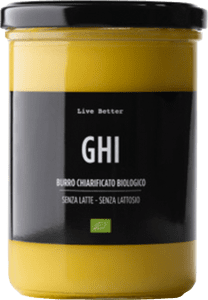
What emerged from this review is the reason why seed oils are not even mentioned in the new guidelines. This is also the reason why ghi and tallow are among our products: they are good fats for cooking because they are stable at high temperatures, as they contain mainly saturated fats. To understand this issue once and for all and the mechanism by which saturated fats are more stable, I invite you to read the in-depth article “Saturated and unsaturated fats”
SUMMARY: SCIENTIFIC REVIEW ON SATURATED FATS
Over the past century, the composition of dietary fats in the United States has undergone one of the most extensive nutritional changes in human history. Traditionally used animal fats (sources of saturated and monounsaturated fats) have been progressively replaced by industrially produced fats and oils rich in omega-6 linoleic acid (soybean oil, corn, cottonseed, canola, sunflower, etc.).
These changes were accelerated by early public health initiatives to reduce the risk of heart disease through general recommendations to decrease total and saturated fats and replace them with “unsaturated” or “polyunsaturated” fats. Although based on the best available evidence at the time, these initiatives resulted in large-scale changes in both the U.S. food supply and population exposure to specific fatty acids-particularly linoleic acid, which is now consumed in amounts higher than can be obtained from natural diets without the addition of seed oils.
Elena's note: Before the invention of seed oils about 100 years ago, the fats consumed by humankind depended on the geographical area they belonged to: olive oil, butter, lard, tallow, coconut oil, palm oil. Apart from olive oil, all these fats are very rich in saturated fat. I have always asked this question: how is it possible that saturated fats, which we have been consuming for millions of years, are responsible for coronary heart disease, which is instead a modern problem? Wouldn't it be more logical to look for the responsibility of modern diseases in modern foods and lifestyles? Such as excess sugar or linoleic acid, for example.
WATCH OUT FOR LINOLEIC ACID
Linoleic acid is an essential nutrient, needed in small amounts for normal growth, skin integrity and other physiological functions. However, modern intake levels from refined oils exceed physiological requirements by many times. The concern is not with the presence of linoleic acid in the diet, but with its concentration and source. The high exposure to industrially refined oils. represents a historically new condition, Whose long-term effects and potential adverse events have not yet been sufficiently studied.
This large-scale consumption of linoleic acid-rich oils represents a recent and atypical nutritional phenomenon. Studies show that such exposure markedly increases linoleic acid concentrations in many organs, suggesting that such high levels of linoleic acid could affect the function of many tissues.
This is the first time that dietary guidelines have drawn attention to potential harmful effects of excess linoleic acid in the diet. In all of human history there have never been these levels of linoleic acid in our diet. The dramatic increase in the amount of linoleic acid is due to the use of seed oils.
FAT RECOMMENDATIONS IN THE GUIDELINES
Let us now look at the final fat recommendations of the new guidelines:
- Healthy fats are abundant in many natural foods, such as meat, poultry, eggs, omega-3 rich fish, nuts, seeds, dairy products whole, olives, and avocado.
- When cooking or adding fat to meals, prioritize oils that contain essential fatty acids, such as olive oil. Other options may include the butter or the tallow of beef.
- In general, saturated fat consumption should not exceed 10% of total daily calories. Significantly limiting highly processed foods will help achieve this goal. Further high-quality research is needed to determine which types of dietary fats best support long-term health.
After fifty years of being told to replace animal fats with seed oils, in these guidelines seed oils are not even mentioned and instead is advised to cook with olive oil, butter and tallow (similar to lard but made from cattle fat). This is a momentous change.
Keeping the 10% limit for saturated fats seems like a contradiction, implicitly admitting that they pose a problem, however, in the next sentence they specify that further research is still needed “further high-quality research is needed to determine which types of dietary fats best support long-term health.” Later we will see why it is not politically possible to remove this limitation today.
But where does the 10% limit on saturated fat come from? Previous guidelines have always been based on epidemiological studies from which the hypothesis was derived that saturated fats could increase coronary heart disease and therefore it was necessary to limit their consumption.
For decades, US dietary guidelines have recommended limiting saturated fatty acids to less than 10% of total energy to prevent coronary heart disease. This recommendation is based on the diet-heart hypothesis that replacing saturated fats with polyunsaturated fats reduces blood cholesterol and this reduces the risk of coronary heart disease. However, the results of randomized controlled trials do not show that reducing saturated fat intake actually decreases coronary heart disease or mortality.
The new guidelines are the first in history that finally that are based on strong causal evidence from randomized controlled trials. These studies show that saturated fats are not harmful.
THE IMPORTANCE OF CAUSAL EVIDENCE
Previous guidelines were mainly based on epidemiological studies, but these cannot prove that A is the cause of B, so they cannot provide causal evidence.
When making dietary recommendations, distinguishing between association and causation is critical. Observational studies can identify correlations between saturated fat intake and cardiovascular outcomes, but they cannot adequately control for confounding factors or isolate the effects of specific substitutions between macronutrients.
To really understand whether a food causes a health effect, we need studies in which people are randomly assigned to diets that differ in only one variable at a time while everything else remains the same. This type of study avoids false conclusions that might occur if I modify multiple variables. Randomized clinical trials where only one variable is changed are considered the most reliable for demonstrating that A causes B, i.e., causal evidence.
Relying on causal evidence helps ensure that public health recommendations achieve the desired effects and avoid unintended consequences. A recent example comes from allergy prevention: for many years, guidelines recommended delaying the introduction of peanuts into children's diets, yet during the time this recommendation was being made, childhood allergy to peanuts continued to increase. Subsequently, randomized controlled trials showed that the introduction of peanuts between 4 and 6 months of age reduced the risk of allergy by 70-80%. This resulted in a global reversal of the guidelines and showed that untested advice may unintentionally cause harm.
HISTORICAL CONTEXT
The persistence of saturated fat restriction in dietary policies reflects the enduring influence of the diet-heart hypothesis that replacing saturated fats with oils rich in linoleic acid reduces cholesterol and, consequently, the risk of coronary heart disease. This reasoning became part of the American Heart Association's recommendations in 1961 and the first U.S. dietary guidelines in 1980.
The five major randomized clinical trials designed to test this hypothesis were conducted in the 1960s and 1970s. Taken together, these studies achieved large and sustained reductions in blood cholesterol by replacing saturated fats with linoleic acid-rich seed oils, but None has demonstrated a significant benefit in terms of mortality reduction for coronary heart disease or all-cause mortality.
Replace saturated fats with unsaturated fats rich in linoleic acid Decreases blood cholesterol, but this does not translate into a benefit, on the contrary:
In the Minnesota Coronary Experiment, for example, each 30 mg/dL reduction in cholesterol was associated with a Higher risk of death than 22%. Similarly, the Sydney Diet-Heart Study-the only trial to have used safflower oil, which is almost devoid of protective omega-3 PUFAs-showed a higher mortality than 62% In the group that consumed seed oils.
These counterintuitive results have not been widely disseminated and, in some cases, have not been Not even published in full until decades later. This means that the first guidelines were developed before evidence from clinical trials was available to scientists, including those who formulated the original U.S. Dietary Guidelines.
This is very serious, so I want to explain it well:
- the Minnesota Coronary Experiment was conducted in 1968-73, but the full results were published 2016 alone.
- the Sidney Heart Study was conducted in 1966-73, but the full results were published 2013 alone.
It is clear in these studies that Replacing saturated fats with unsaturated fats rich in linoleic acid is detrimental to health. They were not published because they were contrary to the “Diet-Heart hypothesis” which was the prevailing belief at that time. I find this behavior unscientific and extremely serious on a moral level because it potentially caused harm to the population. If they had been published we probably would not have spent 50 years being told: saturated fat is bad for you.
For the sake of the record, we must also mention two other studies that are often cited in support of the hypothesis that replacing saturated fats with unsaturated fats is beneficial. But it does not.
Oslo Diet-Heart Study
Participants in the intervention group were advised to replace meat and eggs with fish, shellfish and whale, and were provided with large amounts of sardines in cod liver oil, which provided about 5 grams per day of EPA + DHA (about 30 times the usual intake). In addition, the intervention group increased consumption of fruits, vegetables and whole grains, while industrial margarines rich in trans fats were eliminated from the diet. Thus, the intervention group substantially increased intake of omega-3, vitamin D and other cardioprotective factors while simultaneously reducing exposure to trans fats (which we now know are harmful).
In contrast, the diet of the control group provided about 10% of the energy in the form of trans fats. This control group also consumed a considerable amount, about 25% of the energy, from partially hydrogenated margarines.
In light of these wide differences between the groups in the diets of the two groups, The reduction in coronary events observed after five years cannot be attributed to saturated fat substitution. Significantly, this study was included in all meta-analyses that reported a reduction in risk of coronary heart disease events or mortality associated with saturated fat replacement.
When so many variables are changed in a randomized controlled trial, it is not possible to determine which variable brought benefit. In well-done randomized trials, the two groups do the exact same thing except for one. Only in this way is there causal evidence.
The Finnish Mental Hospital Study is also often cited as evidence in favor of saturated fat reduction, however, it was not a randomized clinical trial because the diet was assigned by hospital and period, not to individual patients, and participants changed over time. In addition, there were differences in psychiatric conditions, drug treatments, and the amount of trans fat consumed. Studies constructed in this way cannot establish causal evidence.
CONCLUSIONS OF THE SCIENTIFIC REVIEW
After more than half a century of research, the body of evidence from randomized clinical trials shows that Reduce dietary saturated fat below 10% of total energy-particularly by replacing them with linoleic acid-rich vegetable oils-reduces blood cholesterol, but Does not reduce coronary heart disease or all-cause mortality. Therefore, we believe that the causal evidence is insufficient to support a generalized population limit of less than 10% of energy from saturated fat.
I summarize for clarity:
- It has been hypothesized in the past that reducing blood cholesterol, reduces coronary artery disease
- Randomized controlled trials confirm that reducing fat reduces blood cholesterol
- this reduction, however, has no benefit on coronary heart disease or all-cause mortality
- Three out of five studies show that Replacing saturated fats with unsaturated fats rich in linoleic acid increases mortality
IMPORTANCE OF THE CHOICE OF STUDY OUTCOMES
When designing a study, it is crucial to choose the right outcomes. To understand whether an intervention really works, one must rely on actual clinical outcomes (primary outcomes) and not indirect indicators (surrogate outcomes).
Example
If we want to evaluate the effectiveness of an intervention on coronary artery disease, the primary outcomes to consider are:
death
infarction
stroke
major coronary events
Cholesterol, on the other hand, is a surrogate outcome. There is a hypothesis that lowering blood cholesterol reduces the risk of coronary heart disease, but this relationship has never been proven. Therefore, reducing cholesterol is not automatically equivalent to reducing heart attacks, strokes, or mortality.
To establish with certainty the role of saturated fats, it is therefore necessary to test whether their reduction leads to a real decrease in coronary heart disease and mortality, i.e., primary clinical outcomes. Unfortunately, studies in the past evaluated whether replacing saturated fats with unsaturated fats lowers cholesterol. Yes it lowers it, but that does not translate into lower mortality.
DIET-HEART HYPOTHESIS
We cannot close this in-depth study without talking about the hypothesis that has influenced our diet more than any other over the past 50 years, the reason we were told: limit eggs and animal proteins because they contain saturated fat.
The “Diet-Heart hypothesis” was formulated in 1953 by Ancel Keys. Following the publication of the Seven Countries Study in the 1970-80s, the hypothesis was institutionalized and incorporated into dietary guidelines. This gave rise to the “low-fat” paradigm, or consuming light dairy products and avoiding animal proteins and fats because they are high in saturated fat.
The hypothesis has never been confirmed by rigorous randomized controlled trials, despite the fact that it has dictated the guidelines for the past 50 years. Fortunately, as of January 7, 2026, things have changed.
LIMITATION OF EPIDEMIOLOGICAL STUDIES
An epidemiological study is observational scientific research that analyzes how and why a disease, or more generally a health event, is distributed within a population and what factors are found to be associated with its occurrence or frequency.
An epidemiological study cannot prove that A causes B because there are too many confounding factors. Epidemiological studies are used to observe possible correlations between A and B: when the population does A then B occurs. However, there may be confounding factors that you are not aware of that actually cause B. To show that A causes B rigorous randomized controlled trials must be conducted in which only the variable A is changed. These studies allow causal evidence to be obtained.
Until now, guidelines have been based on epidemiological studies and randomized trials analyzed without the most rigorous methods (e.g., evaluating a surrogate outcome such as cholesterol). With the new U.S. guidelines, things change because they are based primarily on scientific reviews done with rigorous methods and based exclusively on randomized controlled trials that produce causal evidence. This in my opinion is the biggest and most important change in the new American guidelines.
WHY THE 10% LIMIT OF SATURATED FAT WAS NOT LIFTED
Given that the scientific reviews produced for this new edition of the guidelines show that the 10% limit on saturated fat is just a historical legacy that is not based on any strong causal evidence, why was it not removed?
The guidelines did not remove the 10% limit on saturated fat proposed by experts not because the proposal lacked scientific basis-in fact it was even cited in the final document “further research is needed”-but because removing a numerical threshold that has been used for decades in guidelines, public programs and nutrition education is complex and risky. It takes strong evidence to show that removing it is safe for the population and most importantly it takes a broad consensus (doctors, trade associations, media, etc.). Think that in America who is there complaining about the recommendation to limit ultra-processed food....
Therefore, it was preferred not to change the number, but to shift the focus from individual nutrients to overall food patterns, gradually integrating the message without creating confusion or unwanted effects.
The new guidelines clearly state that saturated fat and animal protein are healthy and can be eaten every day. This is already a great achievement! The saturated fat limit will be lifted in future editions. Unfortunately, new scientific theories need time to be accepted.
ACCEPTANCE OF NEW SCIENTIFIC THEORIES
In 1963, geneticist J.B.S. Haldane wrote that acceptance of new scientific theories consists of four stages:
1. “This theory is meaningless.”
Novelty is rejected as absurd or groundless, often because it contradicts established knowledge.
- “This theory is interesting, but wrong.”
The idea is beginning to be taken seriously, but it is still considered wrong in its results or conclusions.
- “This theory is true, but it is not important.”
The evidence in favor grows; to reduce its impact, its scope or relevance is minimized.
- “This theory is true and it is important, but we have known it all along.”
The idea is fully accepted and assimilated, often retrospectively rewriting history to make it seem obvious.
How long does it take for a new theory to be accepted? No one knows, but still a long time. Physicist Max Planck, the father of quantum mechanics, stated that “a new scientific truth does not triumph by convincing its opponents, but because they die and a new generation grows.” So according to him, acceptance occurs by “human turnover” not because those who believed in the old theory become convinced that the new one is correct. “Human replacement” occurs in about 20 to 30 years.
Why is it so difficult to accept a new theory?
Produces cognitive discomfort; in general, explanations already known are preferred
It must be admitted that what was always claimed was wrong
It threatens established balances
So let's put our hearts at rest, it will take decades for these new guidelines to be widely accepted. The important thing is that the change has started: no more war on saturated fat. The U.S. Department of Health is continuing to repeat this message, “this is the end of the war on saturated fat” this is the end of the war on saturated fat. This is really a momentous change, and all those who claim that these guidelines are not much different from the previous ones are making a false claim. Why they do this I do not know, but the cases can only be two: ignorance or bad faith.
But then does it make sense to keep saturated fat below 10% of total daily calories? The most rigorous scientific evidence available has been provided in this paper, so everyone can make their own informed decision.
As a reminder, humankind has consumed mainly saturated fats for more than two million years. To explore this topic further, I recommend the article “Did we evolve by eating meat?”
In the coming weeks we will also publish summaries of the scientific reviews presented by the new guidelines also on:
Protein: at least 50% must come from animal protein
Unsaturated fats: they are unstable at high temperatures and generate substances harmful to health
Low-carb diets: they are a great tool for regaining health and maintaining it
Knowledge means freedom
Be Aware, Be Conscious, Live Better
Be Informed, Be Aware, Live Better

Leave A Comment