





























 EBOOK
EBOOK Insights
 Blog
Blog Tutorials
 GRASS FED
 training
 LIVES
LIVES
PROTEIN, WHEY, ESSENTIAL AMINO ACIDS, OR COLLAGEN?
This is the ultimate in-depth look at protein: we will go over why protein is essential for healthy living, how much you need to take in, and whether you need to supplement whey, collagen, or essential amino acids. Finally simple menus to easily get to 100 g of protein a day!
To further explore the topic of protein supplementation I point out the very interesting ebook “Protein powder and essential amino acids” by Dr. Manuela Rigo, nutritional biologist.
Brief summary
Our body continually renews the proteins of which it is made.
To do this it needs to receive essential amino acids through food, otherwise it gets them from muscle, consuming muscle mass.
Animal proteins contain more essential amino acids than plant proteins. They also contain more micronutrients. For this reason they are considered high-quality proteins.
Optimal protein intake is 1.2-1.6 grams of protein per kg of body weight.
There is no upper limit of protein. The body can handle as much as 3.5 to 4.3 g per kg body weight.
Nitrogen catabolites are not a problem for people without renal or hepatic insufficiency.
If protein intake is achieved through diet, it is not necessary to supplement because foods also provide micronutrients.
Whey are ranked among the best proteins in existence because they are so rich in essential amino acids and leucine. They also contain minerals.
Collagen is different from all other proteins (see table below) so if you do not consume foods that contain it, it makes sense to take collagen powder.
WE ARE MADE OF PROTEIN
The human body of an adult is composed of:
60/64% water
18/20% fat
15/18% protein
5/7% minerals
1% carbohydrates
Fat is our energy reserve, whereas protein makes up our very body:
muscles
Connective tissue (bones, skin, tendons, ligaments, cartilage)
organs
blood
skin
enzymes, hormones, antibodies
The most abundant protein is collagen, about 25/30% of all body proteins.
WHAT ARE PROTEINS
Proteins are molecules made up of many amino acids. A protein is similar to a pearl necklace, where the pearls are the amino acids. In order for the protein to function, it must take on a certain three-dimensional shape.
PROTEIN RENEWAL
Our body continuously renews proteins: it degrades (disassembles) old ones and synthesizes (builds) new ones. In this way we always have new, well-functioning proteins.
PROTEIN SYNTHESIS
To synthesize new proteins, the body uses:
“Old” amino acids derived from protein degradation
“new” amino acids produced by the body or introduced through the diet
ESSENTIAL AND NON-ESSENTIAL AMINO ACIDS
Essential amino acids are those that our body cannot produce and therefore must be supplied by the diet. If you do not take protein that provides sufficient amounts of essential amino acids, your body will take the amino acids it needs from your muscles. This results in the loss of muscle mass. Today we know that muscle mass is essential for healthy living and aging. Therefore, it is essential to eat high-quality protein that provides adequate amounts of essential amino acids.
PROTEIN QUALITY
The most modern method of assessing the quality of a protein nutritionally is the DIAAS = Digestible Indispensable Amino Acid Score, which in a protein assesses: how many essential amino acids it contains and the ease of digestion (the easier it is to digest, the more amino acids are absorbed).
Values above 100 → high quality protein
Values between 75 and 99 → good quality
Values below 75 → limiting quality
Milk powder 144
Bacon 142
Concentrated milk protein 141
Pork loin 139
Whey concentrate 133
Raw ham 133
Ribeye (rib eye) 130
Whey isolate 125
Eggs 122
Beef Jerky 120
Salami 120
Soybean meal 105
Ground Beef 99
DIAAS values of all proteins are not yet present, here a fairly extensive list can be found.
Caution: if the goal is muscle synthesis, one must also take into account the content of leucine of the meal: at least 2.5 g (3 g for over 65).
ANIMAL AND VEGETABLE PROTEINS
In the paper with the scientific basis (1) of the new U.S. guidelines Don Layman, one of the world's leading researchers on proteins and amino acids, analyzes the quality of proteins.
Brief summary:
- When plant protein increases in the diet, protein intake and protein quality decrease
- Animal proteins contain 3-4 times more essential amino acids than legumes
- you can get the same amount of essential amino acids with plant proteins, but you consume more calories
- Animal protein contains more nutrients: vitamin A, D and B12, zinc, iron, selenium, phosphorus
- To achieve the recommended protein intake 1.2-1.6 g/kg and remain within caloric limits, at least 50% of the protein must be of animal origin
Important clarifications
Protein intake can be derived at 100% from animal protein
Recommended animal protein: red and white meat (including pork), poultry, fish, eggs, and dairy products
HOW MUCH PROTEIN PER DAY
The most recent guidelines, based on the most solid and modern scientific evidence, are the U.S. guidelines (2) published in January 2026, which recommend 1.2 to 1.6 g of protein per kg of body weight (understood as body weight).
Weight 60 kg, protein intake 72 -96 g*
Weight 80 kg, protein intake 96 - 128 g*
*actual protein content of the food.
Actual protein content in 100 g of raw food
100 g eggs = 12.5 g protein = 143 kcal
100 g beef = 23 g protein = 132 kcal
100 g chicken = 21.23 g protein = 114 kcal
100 g sea bream = 18.9 g protein = 105 kcal
100 g parmesan = 32.4 g protein = 397 kcal
100 g cow/sheep ricotta = 8.8/9.5 g protein = 146/157 kcal
100 g cow/wheat whole yogurt = 3.8/6.4 g protein = 66/115 kcal
100 g soybean flour = 36.8 g protein = 469 kcal
100 g cooked lentils (dried) = 6.9 g protein = 109 kcal
100 g tofu = 8 g protein = 76 kcal
MAXIMUM PROTEIN LIMIT
The Fifth Revision of the LARNs (3) published in July 2025 states “scientific evidence does not allow the maximum tolerable intake level (UL) to be defined.” So today we do not know with absolute certainty whether there is a maximum intake limit for protein. The new US guidelines tell us that protein can make up 10 to 35% of daily energy intake.
Based on caloric intake, 35% of protein is equivalent to:
1500 kcal = 131 g protein
2000 kcal = 175 g protein
2500 kcal = 219 g protein
If, on the other hand, we consider the urea cycle (4), that is, our body's ability to dispose of urea (the waste product of protein metabolism), the daily limits would be:
60 kg = 210 - 258 g protein
80 kg = 285 - 365 g protein
It is apparent that the amount of protein 1.2-1.6 g per kg of body weight (body weight) is completely safe for healthy people. In contrast, people with moderate or severe renal insufficiency, liver failure or genetic defect of the urea cycle must limit the amount of protein precisely because they cannot properly manage urea elimination.
DO TOO MANY PROTEINS HARM YOU?
The 2005 edition of the U.S. Dietary Guidelines (5) in the section “high-protein diets” (page 841) lists the main problems associated with high protein consumption. Here are the exact words of the document:
Osteoporosis
Recently it has been concluded that there is no need to decrease protein intake. On the contrary, low protein intake leads to bone loss while higher protein intake increases calcium intake, and if we have sufficient calcium, no bone loss occurs.
Kidney failure
Scientific observations suggest that lower protein intake decrease renal function. It is therefore concluded that the protein content of the diet is not responsible for the progressive age-related decline in kidney function.
NITROGEN CATABOLITES: ARE THEY A PROBLEM?
Nitrogen catabolites are the “wastes” the body produces when it eliminates amino acids it no longer needs. These amino acids to be disposed of come from the proteins that are renewed daily or from the diet.
The main nitrogen catabolite is urea, which is eliminated with urine. The urea production process has a limit, but it is high and would allow us to consume large amounts of protein (4):
60 kg = 210 - 258 g protein per day
80 kg = 285 - 365 g protein per day
For healthy people, nitrogen catabolites are not a problem. Instead, they become a problem when the body cannot eliminate them well, liver or kidney failure (moderate or severe), rare genetic defects of the urea cycle.
PROTEIN SUPPLEMENTATION: IS IT NECESSARY?
If our diet allows us to reach our protein requirements, there is no need to supplement.
The most commonly used products as protein supplements are:
whey, whey protein
Essential amino acids (there are plenty of essential amino acid supplements, including MAPs)
CAUTION: When taking essential amino acids to make up for the absence of protein in a meal, it is essential to check that the recommended dose contains the amount of leucine needed to jump-start muscle synthesis: 2.5 g (3 g over 65). Example: taking 2.5 g of leucine with MAPs requires 13 tablets.
WHAT ARE WHEY
The liquid that remains after cheese production is called whey. Whey has been used to make cottage cheese for centuries, and whey, the whey protein, has also been made for fifty years.
Whey production process:
- Separation of the fat present in the serum by centrifugation
- Ultra filtration: whey is pumped through a membrane with very small pores that separates protein from mineral salts and lactose
- spray drying: what remains from filtration, the liquid protein fraction, is sprayed inside a room where there is very hot air that evaporates the water leaving only the protein powder
This is the process to obtain whey concentrates, which contain 75/80% protein.
There are two other types of whey:
Isolate: these are further filtered to increase the protein content (90%) and almost totally eliminate lactose and minerals.
Hydrolyzed: through the hydrolyzation process, whey is “cut” into smaller molecules, as if predigested.
Whey isolate and hydrolyzed cost at least 50% more than concentrates but do not provide a greater benefit than 50%. They simply contain more protein and less lactose (they also exist lactose-free).
Whey is among the best proteins in existence because it has an amino acid content very close to human requirements, is highly digestible, and is the food with the highest leucine content (Better Whey contains about 12 g of leucine per 100 g of product).
CAUTION: Small amounts of caseins are present in whey. Better whey contains about 2-3% caseins. Isolated whey contains less caseins because they are further filtered, but they are still present.
20 grams of Better Whey provides 16 g of protein and 2.5 g of leucine
24 grams of Better Whey provides 18 g of protein and 3 g of leucine
WHEY, INSULIN AND MUSCLE SYNTHESIS
Whey contains amino acids that stimulate insulin production. For muscle synthesis, the insulinemic effect of whey is beneficial because insulin is the body's most important “anabolic” hormone: it promotes protein synthesis in tissues, and particularly in muscle. In other words, insulin “turns on” the cellular machinery responsible for protein production and at the same time activates mechanisms to reduce protein degradation, promoting and supporting muscle protein synthesis in a coordinated and positive manner.
However, the insulinemic effect of whey may not be ideal instead in individuals with insulin resistance, metabolic syndrome, or diabetes, precisely because of the excessive stimulus due to insulin. Clearly, if they are consumed occasionally, they are not a problem.
Even in strict ketogenic diets, too much insulin spiking could interfere with ketosis (albeit transiently).
DOES WHEY GO INTO PROTEIN SYNTHESIS AT 16%?
Some commercial communications related to essential amino acid supplements claim that whey goes into protein synthesis at 16%, but do not provide scientific evidence to support this. I tried to request them but received no response.
In a very relevant study “Protein, which is best?” (6) the whey protein synthesis is 92%. In this study the protein evaluation index used is NPU (Net Protein Utilization) which is now outdated because the study is from 2004. Today the method for assessing protein quality is DIAAS.
WHEY OR ESSENTIAL AMINO ACIDS?
Essential amino acids have historically been used in body building to take in a very high amount of protein. Normal populations can achieve protein requirements simply through diet.
Essential amino acids are produced by industry through microbial fermentation.
Whey, on the other hand, is a food extracted from milk. In addition to amino acids, they also contain potassium, calcium, phosphorus and magnesium.
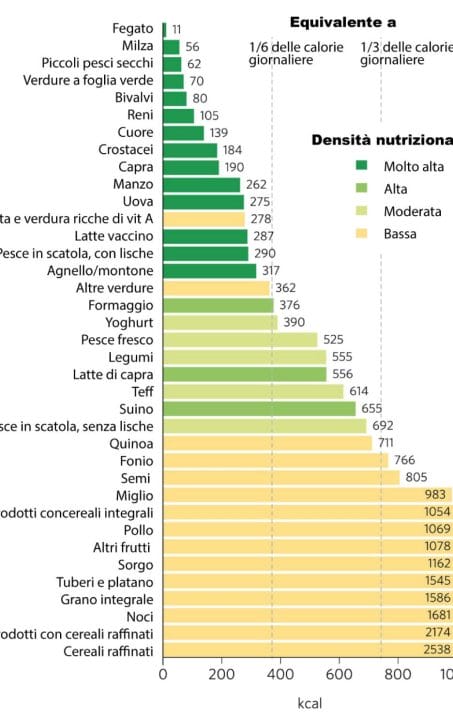
In general, it is best to take foods, as they also provide micronutrients that are essential for health. This chart shows the calories needed to provide the body with 1/3 of the daily requirements of vitamin A, B12, folic acid, calcium, iron and zinc. The fewer calories needed the more nutritious the food. Liver is by far the most micronutrient-rich food in existence. The graph also shows that animal foods are more nutritious than plant foods.
COLLAGEN: DIFFERENT FROM ALL OTHER PROTEINS
Collagen contains amino acids in very different proportions from other proteins:
+500% glycine
+200% proline
Hydroxyproline (not present in other proteins)
Grams of amino acids contained in 100 g of food
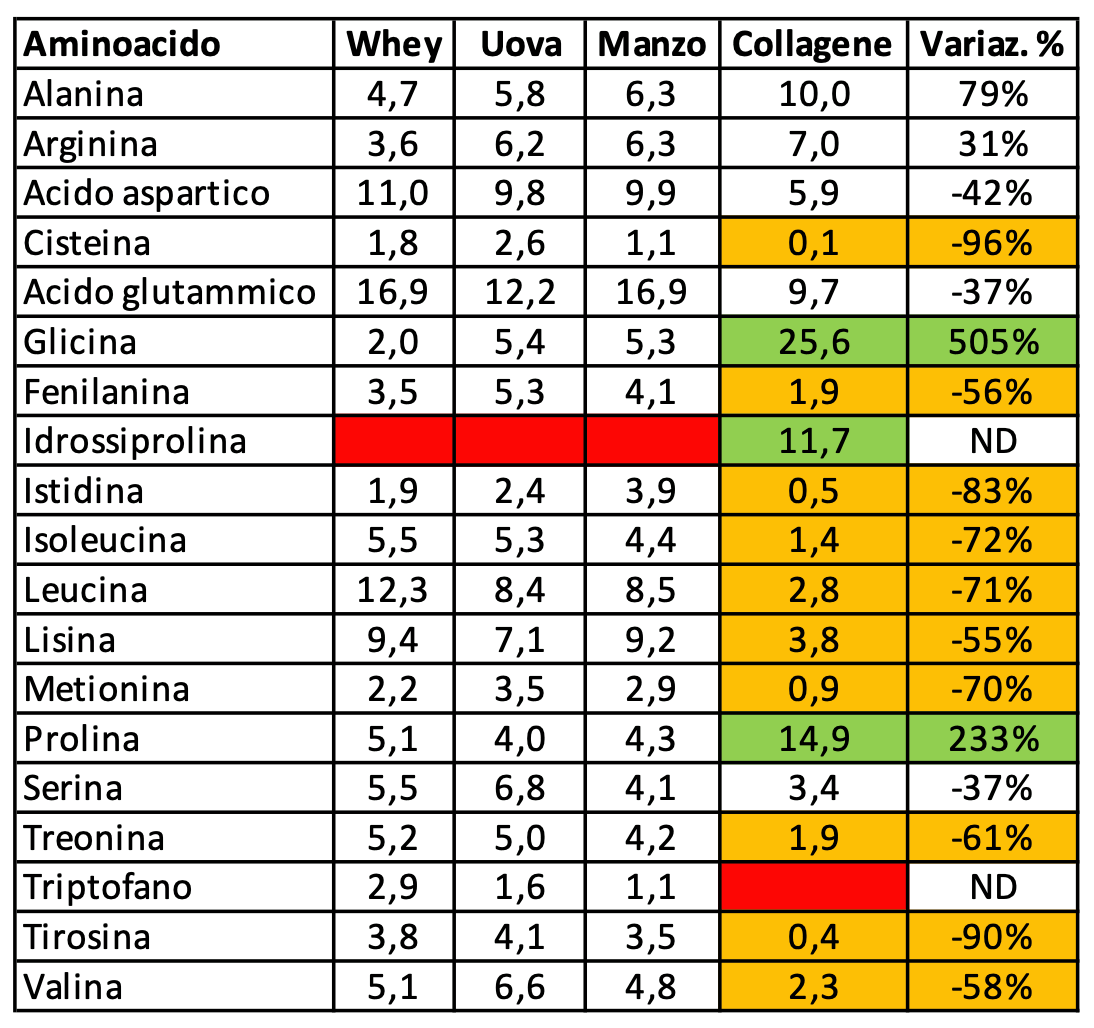
This graph clearly shows why collagen is different: it contains very different amounts of amino acids than all other proteins. Throughout the evolution of humankind we have always consumed foods rich in collagen; today we no longer do. For this reason it is important to re-include it in one's diet.
WHY GLYCINE IS IMPORTANT
Collagen is very rich in glycine, a nonessential amino acid. Our body can produce glycine, but today many researchers claim that the amount produced is not enough (7) and therefore they consider it a semi-essential amino acid.
In addition, people with metabolic dysfunction (diabetes, insulin resistance, obesity, hypertension, etc.) have low blood glycine levels, and glycine supplementation improves several aspects of these conditions (7).
Glycine is very important because it is used to produce:
collagen (the most abundant protein in the human body, accounting for as much as 30% of proteins)
glutathione (one of the most powerful antioxidants produced by our body)
heme group (the active part of hemoglobin)
creatine (muscle and brain energy)
TO TAKE GLYCINE IS IT NECESSARY TO TAKE COLLAGEN?
Absolutely not, you can consume these foods (in descending order by glycine content)
Jelly
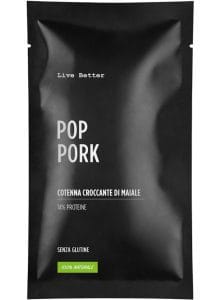
Pork rinds (Pop Pork available again from March 2026)
Pig's ears and feet
Nervetti
Chicken skin and feet
Fish skin
Joints
Bone broth (only if made from joints, skin, tendons, legs)
Collagen-rich cuts (tail, ossobuco, cheek, those that “melt” with long cooking)
SHOULD COLLAGEN BE COUNTED IN PROTEIN?
Any protein should be counted in the daily protein intake, so that includes collagen. Moreover, collagen provides the exact amino acids needed by the body to produce the most abundant protein found in the human body (collagen) so why should it not be counted in the protein intake?
HOW MUCH COLLAGEN PER DAY
Collagen contributes mainly glycine and proline but is poor in essential amino acids, so we recommend that it constitutes at most 25/30% of protein intake. There is evidence (8) that one can get up to 36% without having essential amino acid deficiencies.
EXAMPLES WITH 30 g PROTEIN AND 2.5 g LEUCINE PER MEAL.
Foreword: Many people write to me that they cannot meet their daily protein requirements. The secret is to build every meal around protein.
This section was written with Dr. Manuela Rigo, nutritional biologist.
For most of the population optimal amounts of protein are:
Women: 100 g per day
Men: 150 g per day
Larger amounts of protein can be safely consumed. As we have seen, the body of healthy people is perfectly capable of handling up to:
Women: 210 - 258 g protein per day
Men: 285 to 365 g protein per day
Here are two examples of daily menus with 100 g of protein per day
The indicated weight refers to the raw food.
Weight, protein and leucine values are given in grams
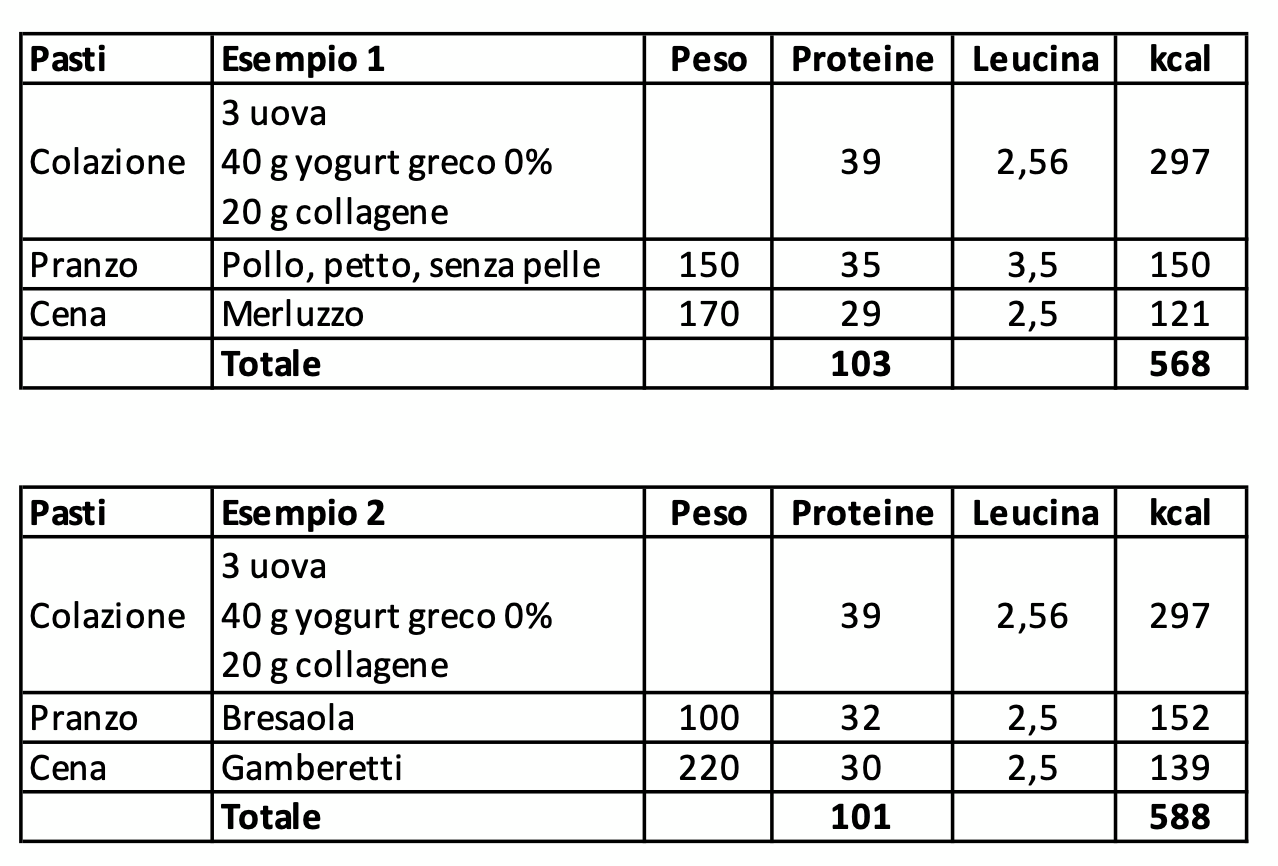
Only protein is shown in the examples. Fats, vegetables and fruits should clearly be added. For those who also want carbohydrates.
The breakfast ingredients are those of the kaiserschmarren Live Better version
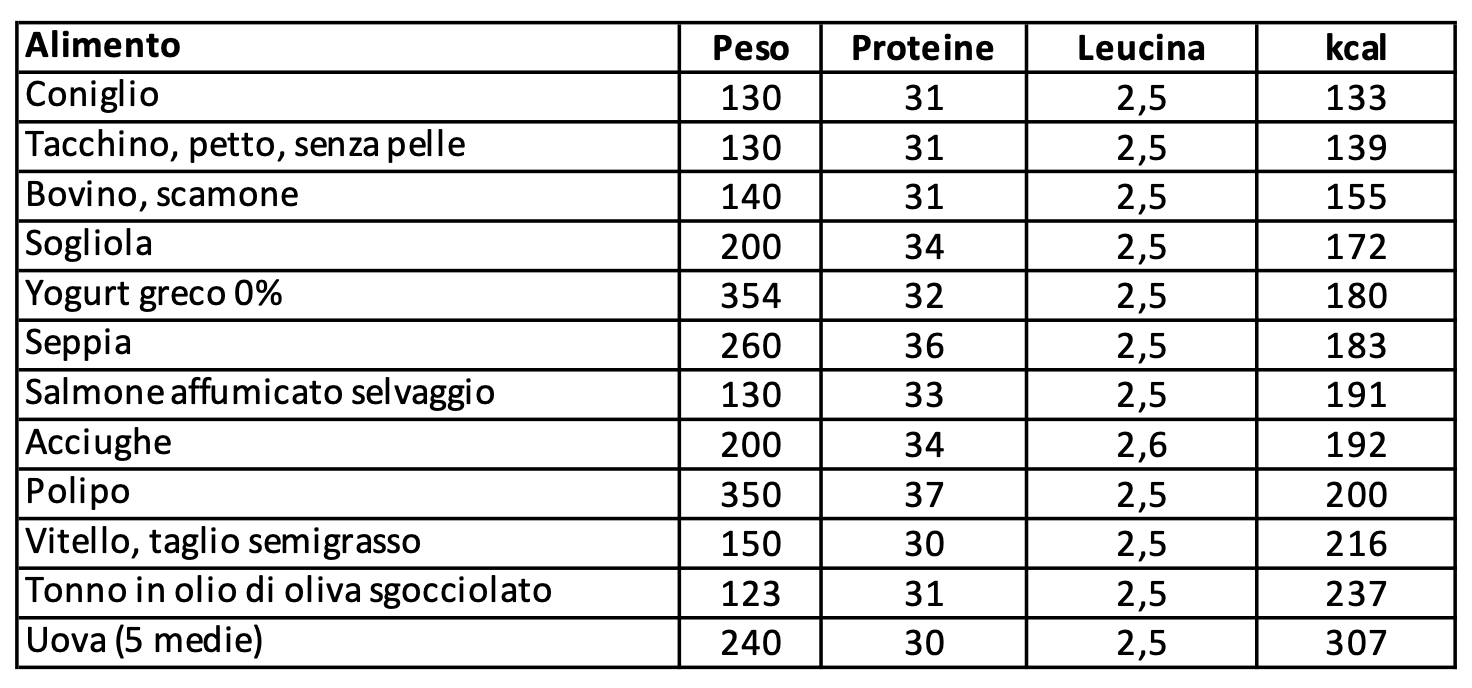
In this table possible protein substitutions
Servings shown provide at least 30 g protein and 2.5 g leucine
In ascending order by caloric content
Knowledge makes one free!
Be informed, be aware, live better


Leave A Comment