






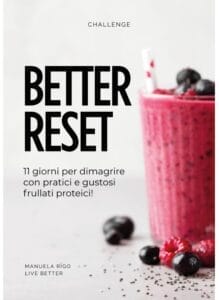















 EBOOK
EBOOK Insights
 Blog
Blog Tutorials
 GRASS FED
 training
 LIVES
LIVES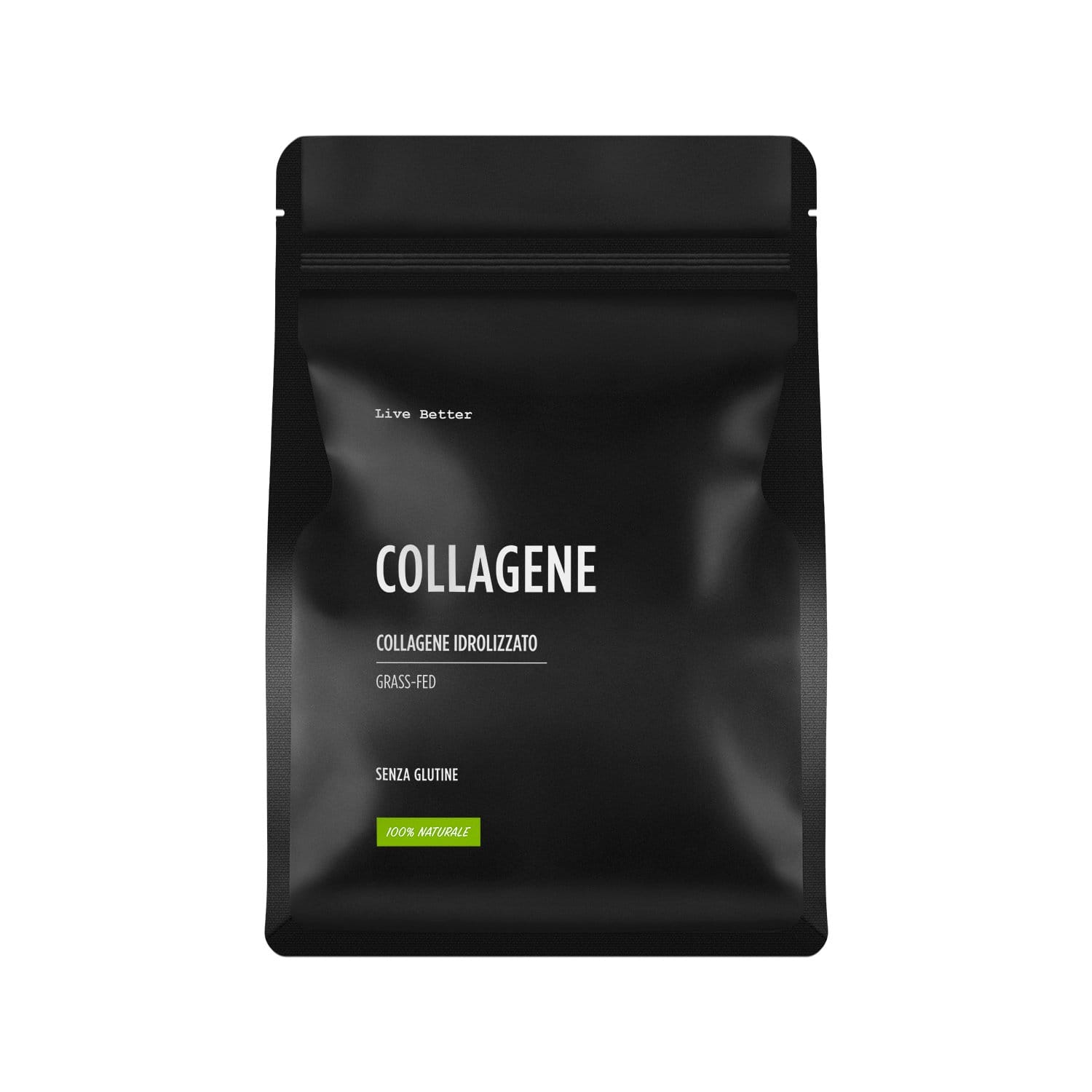
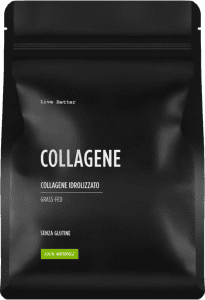
COLLAGEN
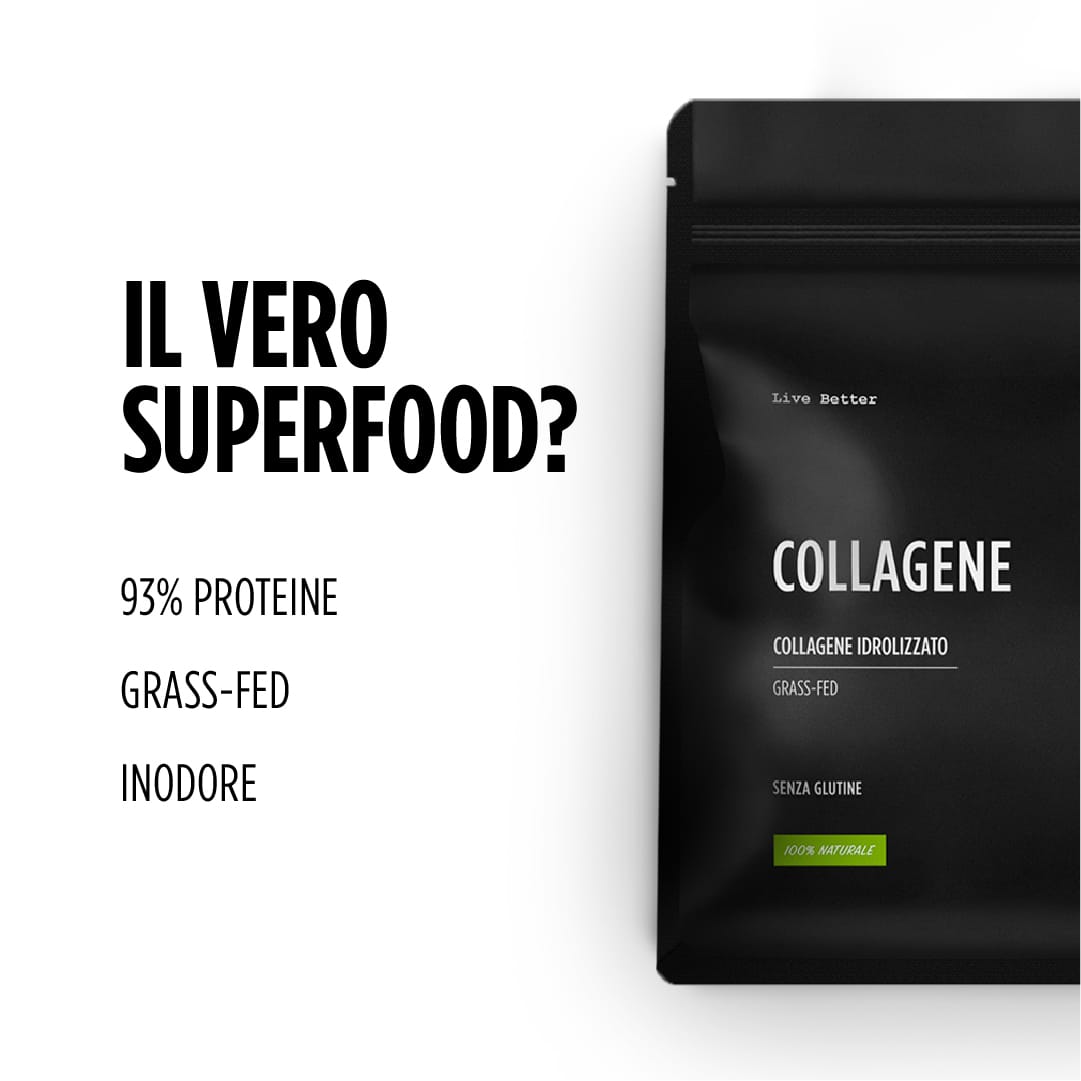
Hydrolyzed collagen from pasture-raised (grass-fed) cattle. Practically tasteless.

COLLAGEN
Hydrolyzed collagen from pasture-raised (grass-fed) cattle. Practically tasteless.
Free shipping over €65Sign up for the newsletter to get 10% discount
Free shipping over €65NEWSLETTER 10% DISCOUNT

GLICINA MON AMOUR
È l’alimento in assoluto più ricco di glicina, un aminoacido utilizzato dal corpo per produrre collagene, glutatione (antiossidante), creatina e altre molecole. Praticamente insapore. Peso molecolare 2.000 Dalton. Per approfondire i benefici del collagene leggi READ MORE.
HOW MUCH, WHEN AND HOW TO TAKE IT
HOW MUCH AND HOW TO TAKE IT
HOW MUCH: credo che oggi nessuno abbia una risposta certa. Noi consigliamo 20/30 g per le donne, 30/40 g per gli uomini. ATTENZIONE. il collagene non deve costituire più del 30% dell’introito proteico giornaliero. Il restante 70% dovrebbe provenire da proteine complete ricche di aminoacidi essenziali. Le proteine animali contengono aminoacidi essenziali in quantità ottimali per il fabbisogno umano e una buona quantità di leucina, necessaria per la sintesi proteica muscolare. Leggi l’this insight about proteins to understand better.
WHEN: when you are most comfortable. It doesn't matter. It can be taken all at once, or in two or more times. In short, as you prefer
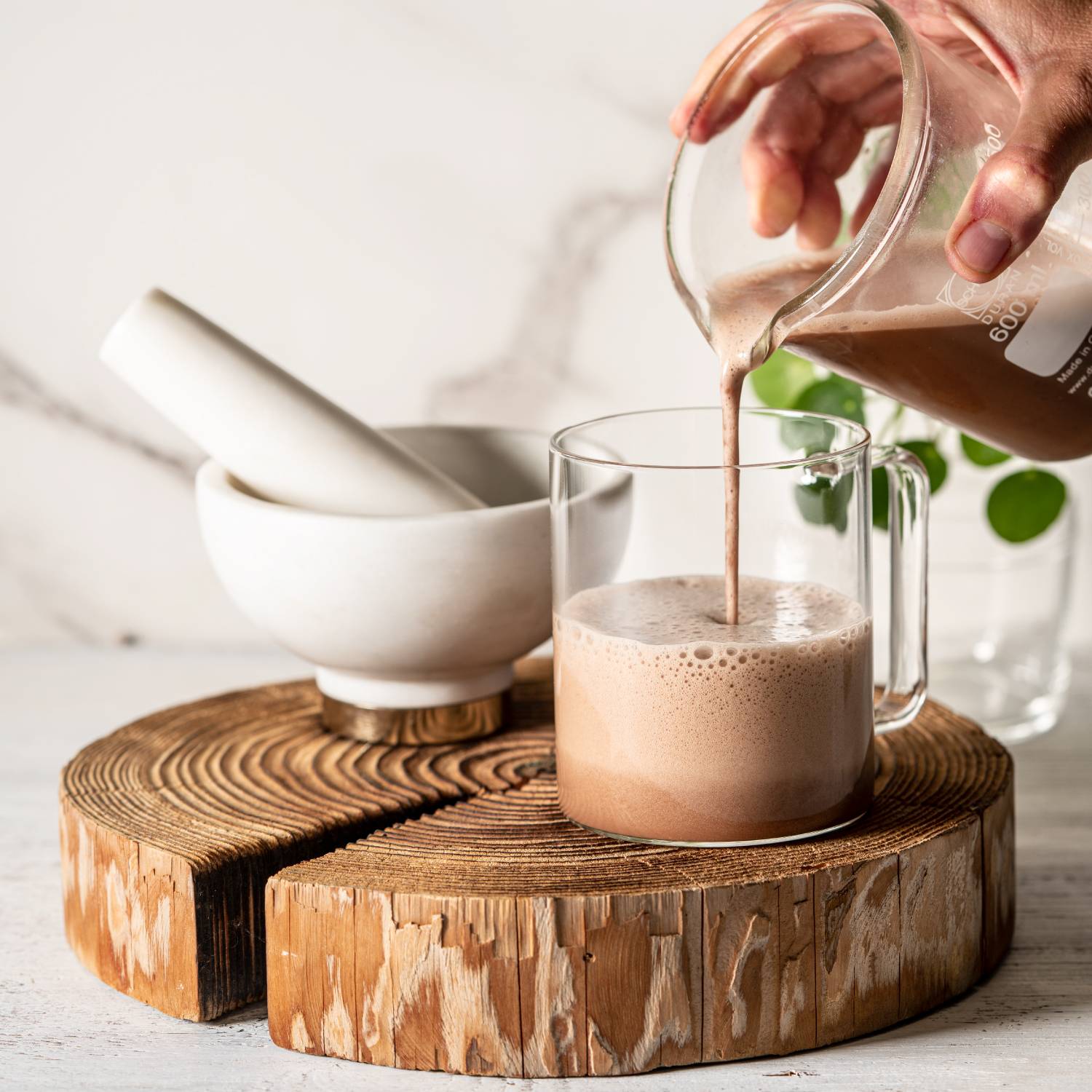
HOW: It should be dissolved in a liquid: water, hot or cold drinks, broth, yogurt, porridge, smoothies, soups, omelets, or even mixed into dough for cakes, cookies, bread, and more. It’s heat-stable and can be baked. Our collagen is truly tasteless, so it won’t alter the flavor of your recipes.
Specifications


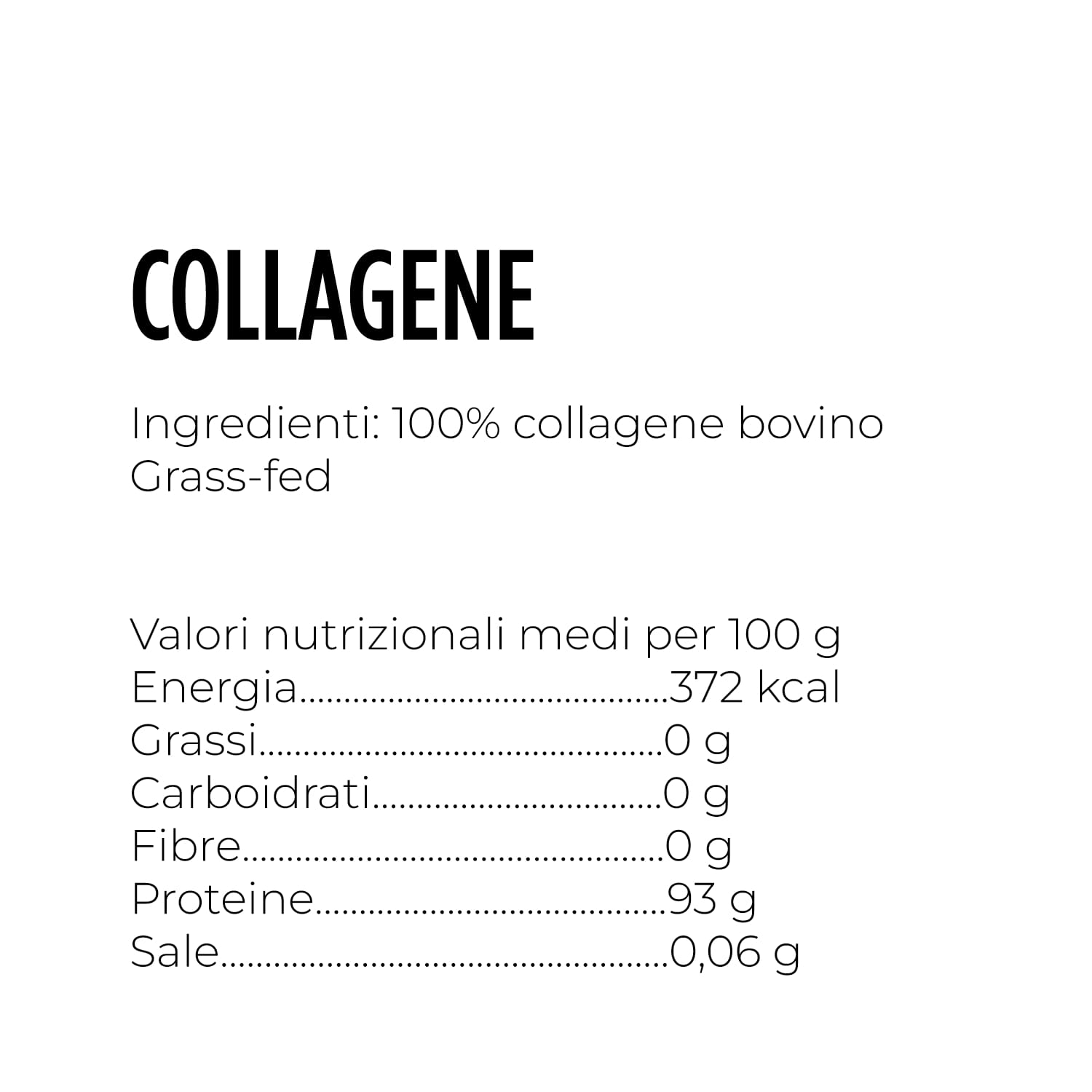
100% grass-fed bovine collagen
Contains mainly type I collagen and also type III collagen
| Mean values | 100g |
|---|---|
| Calories (kcal) | 372 |
| Fats (g) | 0 |
| of which saturated (g) | 0 |
| Carbohydrates(g) | 0 |
| of which sugars (g) | 0 |
| Fiber (g) | 0 |
| Protein (g) | 93 |
| Salt (g) | 0,06 |
100 g of collagen contains the following amino acids (average values, vary for each batch)
Glycine 25.6 g
Proline 14.9 g
Hydroxyproline 11.7 g
Alanine 10 g
Glutamine 9.7 g
Arginine 7 g
Aspartic acid 5.9 g
Lysine* 3.8 g
Serine 3.4 g
Leucine* 2.8 g
Valine* 2.3 g
Phenylalanine* 1.9 g
Threonine* 1.9 g
Isoleucine* 1.4 g
Methionine* 0.9 g
Cysteine + Cystine 0.07 g
Histidine* 0.5 g
Tyrosine 0.37 g
Tryptophan* <0.01 g
*essential amino acids
Gluten-free
Lactose-free
Nickel-free
Paleo, low-carb, ketogenic
Raw materials
Collagen: Turkey
To learn about our supplier's certifications, click HERE
Unless specifically stated, the raw material is produced in the same nation of origin
Packaging: Italy
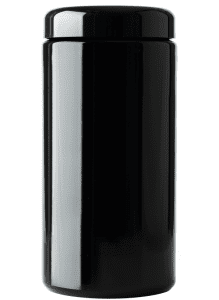
Store powdered products in a cool, dry place, ideally away from direct light. Moisture and light are the main enemies of proper food preservation. To prevent clumping or pantry pests, glass containers are the best option.
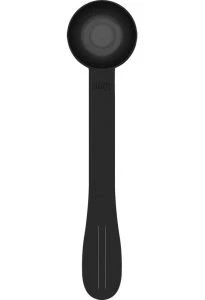
One scoop contains about 4 grams
frequently asked questions
Noi consigliamo 20/30 g per le donne, 30/40 g per gli uomini. ATTENZIONE. il collagene non deve costituire più del 30% dell’introito proteico giornaliero. Il restante 70% dovrebbe provenire da proteine complete ricche di aminoacidi essenziali.
It needs to be diluted in a liquid: hot or cold drink, smoothie, soup, yogurt, omelet. The more liquid there is, the better it will dissolve and the less you will perceive its taste. Although in truth, our collagen is almost tasteless.
Our supplier manufactures in Turkey, which falls under European regulations for collagen production, so it must comply with all relevant European regulations. Companies that produce in Brazil or China are not required to comply with these regulations.
By law, any European collagen producer must comply with the following regulations:
EC 853/2004, which requires, among other things, sterilization with UHT
EC 852/2004
EC 178/2002
The supplier also has a production facility in Switzerland, but the production capacity is MUCH smaller, so we would not have the ability to guarantee almost totally tasteless and odorless collagen. The Turkish production capacity, on the other hand, allows us to always have batches of virtually tasteless collagen.
In addition, our supplier is FSSC 22000 certified, a certification scheme recognized by the Global Food Safety Initiative (GFSI). GFSI certifications are globally recognized food safety standards developed to improve food safety throughout the supply chain. FSSC certification is voluntary
It is also ISO 9001 and ISO 22000 certified
Our supplier has very high quality standards as it also supplies the world's largest food company-Nestlé, which with Vital Proteins is also the market leader in collagen. The accreditation process to become a Nestlé supplier is very complex as the quality standards required are very high. I give an example understandable even to non-technical people: collagen packaging must take place in a clean room. A clean room is a highly controlled work environment designed to minimize the presence of particulate contaminants. Simply put, it is a space characterized by highly filtered air, controlled temperature and humidity, and strict procedures to limit the introduction of foreign particles.
I realize that to some people reading Turkey may generate doubts, but they are just prejudices. Turkey is a great nation, just look at their beautiful television series. We had Cinecittà, and today? On the biggest channel in the world, Netflix, it is the Turkish series that are depopulated, not the Italian ones.
There are no known contraindications. However, collagen may not be suitable for people who:
- Sensitive to histamine
- Affected by hyperoxaluria
Consultare il proprio medico se affetti da queste patologie
INSTAMINE
Those with histamine sensitivity may experience side effects. Collagen tolerance is highly individual: some people with histamine intolerance have no issues, while others may react.
If you have a histamine-related food sensitivity or mast cell activation syndrome (a more severe and clinically recognized condition), you may need to avoid collagen, gelatin, bone broth, fermented vegetables, and seasoned foods, depending on your individual tolerance.
If you have problems with histamine, I recommend the following. READ MORE Of functional physician Dr. Lorenzo Toccacieli.
Only individuals with this type of condition might experience problems when taking collagen or gelatin, we use the conditional because there is currently no conclusive evidence. This is due to the fact that some hydroxyproline and glycine may be converted into calcium oxalate.
Oxalates can contribute to calcium oxalate stone formation only in patients with secondary hyperoxaluria. For all other individuals who have calcium oxalate stones but not hyperoxaluria, the general recommendation is simply to reduce foods that are particularly high in oxalates — such as beets, spinach, and tomatoes. Once these are removed, there is little evidence linking moderate oxalate intake to an increased risk of stone formation. Instead, dehydration, low citrate levels, metabolic syndrome, and genetic predisposition are currently considered the main factors associated with kidney stone development.
Today it is estimated that calcium oxalates excreted with urine result from: (total does not make 100% because these are estimates, not certainties)
- For about 50% from the oxalates in the food we consume (1)
- For about 40% from ascorbic acid or ascorbate (vitamin C). In people predisposed to stone formation, it appears that ascorbic acid may contribute even more, up to 80%, to the presence of oxalates in urine. (2)
- For about 15% from hydroxyproline (1)
- For less than 5% from glycine (1)
Collagen and gelatin contain glycine and hydroxyproline
If you have problems with kidney stones you might find it helpful to look at this live with Dr. Francesca Manfra, functional physician, In which we talked about what causes kidney stones and what can be done to decrease their formation. In the first 20 minutes, Dr. Manfra explains in detail why collagen is NOT one of the causes of kidney stones.
Absolutely not.
Il collagene è una proteina e per essere assorbito ha solo bisogno di essere digerito. La vitamina C serve al nostro corpo per sintetizzare nuovo collagene, per essere precisi serve per idrossilare prolina e lisina.
È necessario integrarla? Al momento nessuno ha una risposta certa a questa domanda. Io la assumo perché ha tanti benefici e la utilizzo da fonti naturali, “Vitamina C pura” del dottor Giorgini.
Quanta vitamina C assumere? Dipende dallo stile di vita. Attenzione: ci sono limiti intestinali di assorbimento intestinale perché viene assorbita principalmente nel tenue tramite trasportatori specifici (SVCT1, Sodium-Dependent Vitamin C Transporter 1). Poiché il numero di trasportatori è limitato, all’aumentare della dose la percentuale assorbita diminuisce.
Valori indicativi nell’adulto sano:
| Dose singola | Percentuale assorbita |
|---|---|
| 30–100 mg | 80–100% |
| 200 mg | ~70–90% |
| 500 mg | ~50–70% |
| 1000 mg | ~40–50% |
| 2000 mg | ~20–30% |
- 100 mg ingeriti → possono essere assorbiti circa 80–100 mg.
- 1000 mg ingeriti → possono essere assorbiti circa 400–500 mg.
- La quota non assorbita rimane nel lume intestinale e viene eliminata con le feci.
This is why collagen is more easily digested than gelatin: it's already broken down into peptides, making it, in a sense, “pre-digested.”
All collagen on the market is hydrolyzed. If it were not it would be called gelatin. These are the two products you get from animal collagen.
Let's start at the beginning: collagen is the "glue" that holds the bodies of animals together. In its natural form it is insoluble. Gelatin, what we call "isinglass," is made by partially dredging collagen with heat. Gelatin is soluble in hot water. Collagen powder is obtained through the process of hydrolyzing animal tissues such as bone, skin, and cartilage (our collagen is produced exclusively from the skin of pasture-raised cattle. Collagen powder is soluble in both hot and cold water.
Gelatin forms a gel; collagen does not because it is composed of smaller molecules. Our gelatin has a molecular weight of about 50,000 Da (dalton). Gelatin can have different molecular weights from 20,000 Da to 100,000 Da. The molecular weight of gelatin determines its Bloom, or gelling power; the higher the bloom, the higher the gelling power. Our collagen has a molecular weight between 1,800 Da and 2,000 Da. In contrast, the native collagen molecule (found in animal tissues) has a molecular weight of 300,000 Da.
Why am I telling you all this? During digestion, proteins must be broken down in order to be absorbed; if a protein is smaller in size it is absorbed faster because it is easier to break it down.
I wrote a this insight On all objections to collagen.
A couple of points here: one of the most popular objections is “the molecule is not absorbed whole.” These people believe that you supplement collagen by thinking that the collagen molecule (bovine, porcine, or marine) is absorbed whole from the gut and goes whole into the skin to plump it up. This is nonsense and shows the ignorance of these people on the subject.
1) Any protein to be absorbed must be digested, that is, “cut” into smaller pieces that can be absorbed by the intestines. No company selling collagen claims that it is absorbed whole, partly because they all sell collagen hydrolyzed.
2) All collagen is hydrolyzed: this means that the original molecule is “cut” into smaller molecules, the peptides. In this way it is as if it were pre-digested and thus is more easily and quickly digested. So the collagen was not whole to begin with either.
La ragione per cui io integro collagene è la glicina. Esistono diverse evidenze che la glicina sia un aminoacido condizionatamente essenziale: il nostro corpo non riesce a produrne in quantità sufficiente per le necessità giornaliere. Inoltre si osserva che le persone con disturbi metabolici (obesità, diabete tipo 2, fegato grasso) hanno bassi livelli di glicina circolante. Questi bassi livelli di glicina si riscontrano spesso anche in caso di infiammazione, resistenza insulinica, alto stress ossidativo, gravidanza avanzata, esposizione a xenobiotici (sostanze estranee al normale metabolismo di un organismo, sia di origine naturale che sintetica). Precisazione importante: oggi non esistono certezze scientifiche che integrare collagene, glicina o consumare alimenti ricchi di glicina possa migliorare queste patologie.
Assumere collagene (l’alimento in assoluto più ricco di glicina) fornisce al nostro corpo questo importantissimo aminoacido. La glicina rappresenta il 33% degli aminoacidi di cui è composto il collagene ed è necessaria per la produzione di glutatione, gruppo eme, purine, creatina e sali biliari.
Important: You don't have to take collagen, just incorporate foods that contain it into your daily diet: gelatin, nerves, joints, or animal skin. Bone broth, contains interesting levels of collagen only if it becomes gelatinous when it cools.
The absolute richest natural food (which has not undergone processing) in collagen is pig skin.
Our collagen is produced only from cattle skin
“I was advised to take type II collagen for my joints, what type of collagen does yours contain?”
It does not matter to our bodies what type of collagen we take in, because when we ingest collagen in order for it to be absorbed by the intestines it must be “broken down” into the individual amino acids of which it is made or into small groups of them. Whether these amino acids come from type I, II or other collagen makes no difference. Our body will then use some of these amino acids to build new collagen.
However: our collagen contains mainly type I collagen and to a small extent type III collagen, as it is obtained from the skin of (pasture-raised) cattle.
There are multiple types of collagen in our bodies, to date 29 are known, but let's look at just the two main ones:
Type I: about 90% of the collagen found in the human body. It is found in skin, bone, tendons, arteries, fibrous cartilage and cornea.
Type II: hyaline cartilage, vitreous body.
Hyaline cartilage is smooth and flexible but less resistant to traction than fibrous cartilage. It is found in joints (articular cartilage), the ends of long bones (growth cartilage), trachea, bronchi, and nose. It reduces friction in joints, cushions shocks and is involved in bone growth. It is the most common type of cartilage.
Fibrous cartilage is dense, very resistant to compression and traction, and is stiffer than hyaline cartilage. It is found in knee menisci, intervertebral discs, pubic symphysis, and some joints (e.g., temporomandibular). It absorbs shock and provides mechanical strength in areas subjected to high stress or pressure.
Osteoarthritis is a condition related to the deterioration of cartilage. In most cases it is due to aging (more than 70% of people over 55 suffer from it) but it can also be caused by poor posture that makes the joint work poorly. For example, after an accident if we do not properly recover the muscles in the knee, it can work out of alignment and wear down the knee cartilage. Another cause can be vare or vague knees. Obesity also contributes to cartilage deterioration.
Il collagene può aiutare? Esistono diversi studi (1,2) dove si osserva che l’assunzione di collagene sia benefica per le articolazioni, ma sono risultati preliminari che non dimostrano una causalità certa. Oggi non esistono indicazioni sulla salute autorizzate dall’UE per il collagene idrolizzato in relazione alla funzione articolare.
Evidenze anedottiche: molte persone riportano che l’assunzione di collagene ha migliorato la condizione delle articolazioni. Purtroppo le evidenze anedottiche però non sono evidenze scientifiche, in quanto sono esperienze personali che potrebbero essere influenzate da molti fattori.
You don't have to necessarily take collagen, just habitually consume collagen-rich foods such as: gelatin, ribs, animal skin (the richest one is pig skin), collagen-rich cuts such as bovine tail. (3)
BIBLIOGRAPHY
1) https://pmc.ncbi.nlm.nih.gov/articles/PMC8521576/
2) https://pubmed.ncbi.nlm.nih.gov/30368550/
3) https://fdc.nal.usda.gov/food-search?component=1225
In Europe, the production of gelatin and collagen must comply with strict purity standards. The final product must have a conductivity and therefore a salt content below 2000 µS at 1% concentration. To reach this level of purity, manufacturers use ion exchange resins. These include cationic resins, which remove positively charged ions (cations), and anionic resins, which remove negatively charged ions (anions). This process has a direct impact on the overall purity of the product, ensuring that the heavy metal content is practically zero.
In addition, the limit content of heavy metals is subject to EU reg. 853/2004.
No, there is no such thing as organic collagen because part of the process by which it is produced, hydrolysis, is not allowed in the organic protocol. This is the setssa reason why organic stevia does not exist: one step of production is hydrolysis.
No, that’s incorrect. The claim is based on a misreading of this study. What the study really shows is that marine collagen retains 1.5 times more water than collagen from mammals.
No, there is no such thing as vegan collagen. Collagen is the structural protein found in all animals. In plants this role is filled by cellulose, which is indigestible to us humans. What is sold as “vegan collagen” is a mix of amino acids similar to what is found in animal collagen. Similar but not the same: for example, plant collagen lacks hydroxyproline, one of the most+ abundant amino acids in plant collagen The amino acids used to create “vegan collagen” can be extracted from plants or synthesized in the lab.
I prodotti Live Better possono essere assunti anche in gravidanza, tranne il Pure Biltong e i Kaminwurz, in quanto sono stagionati.
Pure Jerky is cooked, not raw meat, so there's no problem.
The only caution is Chokkino because it contains caffeine
A cup of Chokkino espresso contains only 11 mg of caffeine (an espresso coffee contains 80 mg)
EFSA's recommended daily limit of caffeine for pregnant women is 200 mg
Caffeine is naturally present in cocoa, and therefore also in chocolate. However, chocolate contains less caffeine than cocoa powder.
Cocoa powder contains less cocoa butter and therefore the caffeine is "concentrated"
Tutti i prodotti Live Better possono essere assunti in allattamento
Consultare il proprio medico per esigenze particolari
No, si può anche suddividere.
Studies suggest that the best times to consume protein are at breakfast and dinner. To stimulate protein synthesis, it's important to consume at least 30 grams of complete protein (containing all essential amino acids) or 12 grams of essential amino acids in a single meal. Since collagen is not a complete protein, it’s ideal to combine it with other high-quality protein sources such as eggs, fish, or meat in the same meal.
No, non è necessario interromperne l’assunzione se è solo collagene senza altri ingredienti.
Noi consideriamo il collagene in purezza un alimento, non un integratore, in quanto il collagene altro non è che gelatina idrolizzata, ovvero tagliata in molecole più piccole.
Nel corso dell’evoluzione, i nostri antenati consumavano anche le parti dell’animale ricche di collagene, che contiene il 25% di glicina. Oggi quando si consuma solo il muscolo, che contiene solo una minima parte di collagene. Quindi il corpo per 2,5 milioni di anni e fino a poche decine di anni fa (anche i nostri nonni mangivano alimenti ricchi di collagene) ha ricevuto glicina attraverso l’alimentazione.
Indeed!
MAPs contain only essential amino acids, whereas collagen contains mainly glycine, proline, and hydroxyproline, which are nonessential amino acids.
No. As a matter of environmental sustainability all our bags do not contain a measuring cup. If they did contain it, customers who often buy our products would end up with a collection of measuring cups. This would make no sense, as the Earth is the only planet we have and we need to take care of it by living consciously. Instead, our boxes contain the measuring cup, as it is usually the first purchase a customer makes.
You can view which products are suitable for ketogenics by selecting the relevant filter in this page
Our products suitable for the ketogenic diet are:
Chokkino, ChokkoCocco, Chokkococcoccino
Collagen
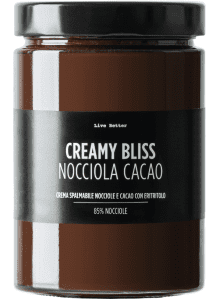
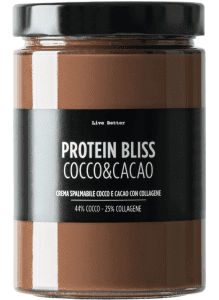
Protein Bliss and Creamy Bliss spreads
Coconut milk powder
Latte di mandorla in polvere
Better Mayo
Ghi
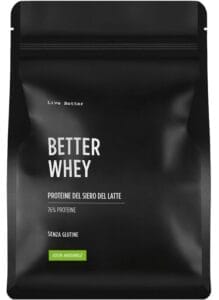
Better Whey
Pure Jerky
Pure Biltong
Jelly
Bagna cauda
Better Sweet
Choko Loco (erythritol)
Albumen powder
Yolk powder
Cocoa powder
Coconut flour
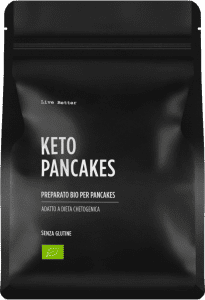
Keto Pancakes
Magic Powder
Vanilla Dream
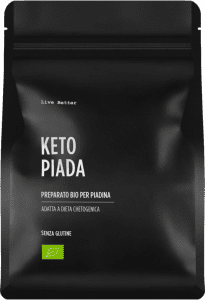
Keto Piada
Keto Chok
Erythritol
Psyllium
Yes of course. Collagen is a protein, and children need more protein than an adult because they are growing.
The date shown on NON-fresh products is not the expiration date, but the TMC.
TMC means Minimum Storage Term and is NOT an expiration date. The product is always perfectly edible after this date. When you read “best before...” on a product, it means it is not an expiration date but the TMC minimum shelf life.
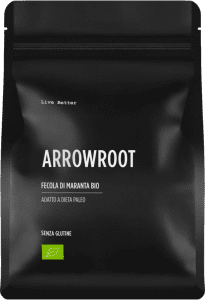
PLEASE NOTE: Our products are very stable because they are in powdered form and contain mainly saturated fats, which are naturally very stable. We have tested many of them even more than one year past their TMC date, and they were still in perfect condition, including coconut milk, cocoa powder, erythritol, and arrowroot.
How to tell if a product is still good? Very simple!
Just take a look: are there any signs of mold, insects, or anything unusual?
Smell: smell?
If the answers to these two questions are no, the product is still good.
Think about this: the expiration date was invented 50 years ago. Humankind has existed for 2.5 million years. Your senses are perfectly capable of recognizing a product gone bad. Trust us!
10% of European food waste is caused by the misinterpretation of this date. Tell your friends about this important distinction between TMC and expiration date. Awareness will save the world.
WHAT OUR CUSTOMERS THINK
REVIEWS
214 reviews for COLLAGENE
4.99
No reviews found.

checked
-
COLLAGEN - 1 k g
Paola C.
30.05.2026 -
COLLAGEN - 500 g
Lo uso da tempo, mi trovo bene e confermo insapore
Claudia G.
21.05.2026 -
COLLAGEN - 1 k g
Buono, profumo deciso. Nell’impasto con carne trita (non magra) e tuorlo uovo, ham impeccabili.
CLAUDIO B.
14.05.2026 -
COLLAGEN - 1 k g
Lo uso da anni e le mie articolazioni e la mia pelle ringraziano! Lo assumo regolarmente tutte le mattine nello yogurt greco intero. Un vero toccasana. Non ho più avuto dolori articolari, vertebrali o ginocchia scricchiolanti. La pelle del collo e del décolleté è visibilmente levigata (ho 62 anni). Non rimango mai senza!!!
emanuela B.
07.05.2026 -
COLLAGEN - 1 k g
OTTIMO PRODOTTO, HO NOTATO DELLE DIFFERENZE SULLE MIE GINOCCHIA E I CAPELLI CRESCONO PIU’ VELOCEMENTE
BARBARA C.
27.03.2026
recipes
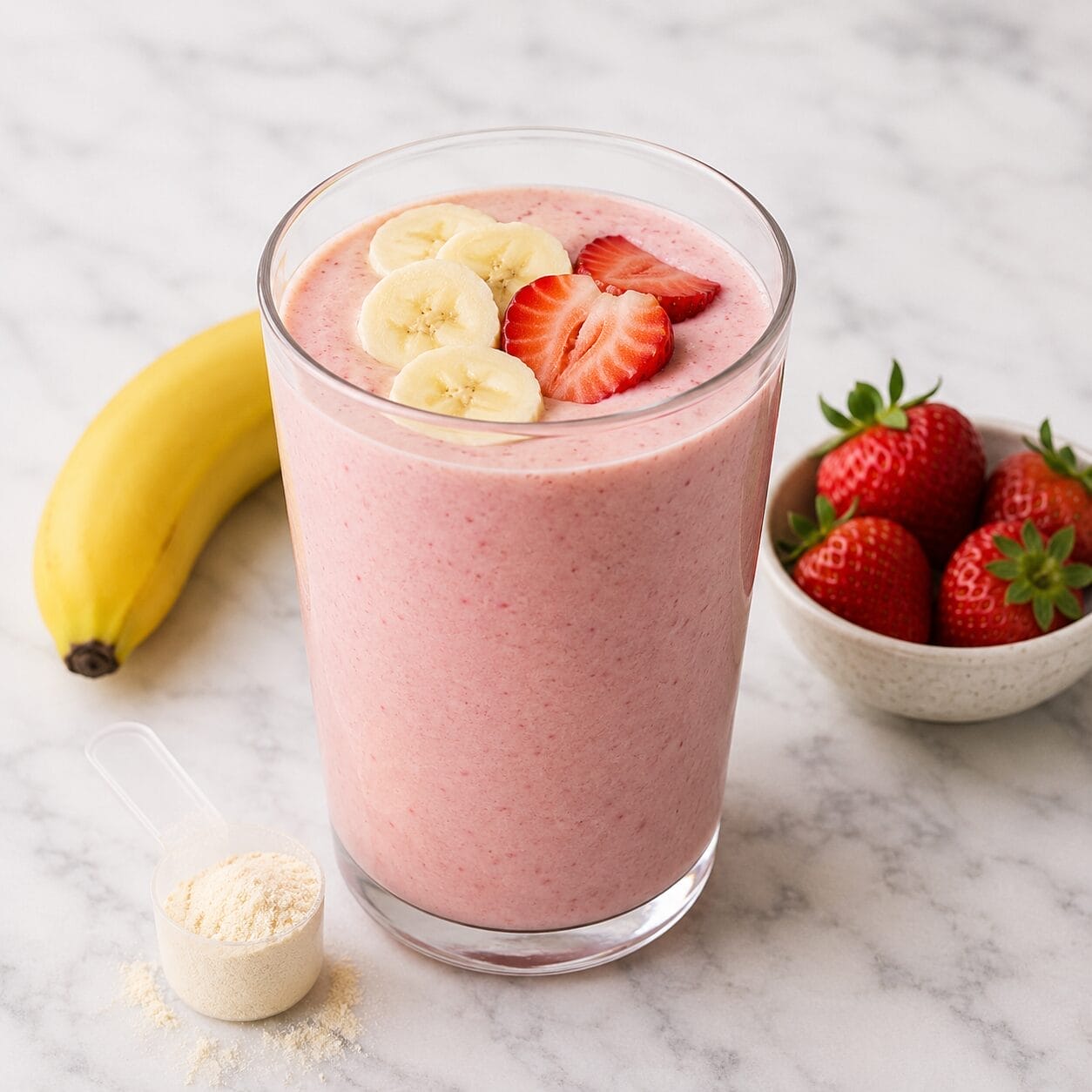

INGREDIENTS
25-30 gr di Better Whey
5-10 gr di collagen
1 banana
Una manciata di fragole o frutti rossi
Acqua, latte o kefir
PROCEDURE
Frulla tutti gli ingredienti e gusta il tuo shake.
Ricetta della dottoressa Manuela Rigo
08 May 2026


INGREDIENTS
50 g Creamy Bliss al pistacchio
10 g pistacchi
40 g Better Whey
25 g Collagen
300 g acqua
PROCEDURE
Mescolare tutti gli ingredienti in polvere con l’acqua fino a ottenere un composto omogeneo. Versare in un contenitore adatto al congelatore. Metti in freezer per 24 ore. Dopo inserisci nel Ninja Creami e lancia il programma Light Ice Cream, poi 1 respin.
Guarnire con i pistacchi tritati
Gisella's Recipe
16 April 2026


INGREDIENTS
250 g di filetti di nasello surgelati
5 misurini di collagen
1 egg
30 g di parmigiano
1 teaspoon of evo oil
salt
pepe garofanato
prezzemolo tritato surgelato
PROCEDURE
Cuocere il nasello in friggitrice ad aria.
Sminuzzare la polpa quando è quasi fredda.
Aggiungere tutti gli ingredienti e mescolare molto bene. Formare le polpette.
Cuocere in friggitrice ad aria 15 minuti, girandole una volta a metà cottura.
Ricetta di Emanuela
16 April 2026
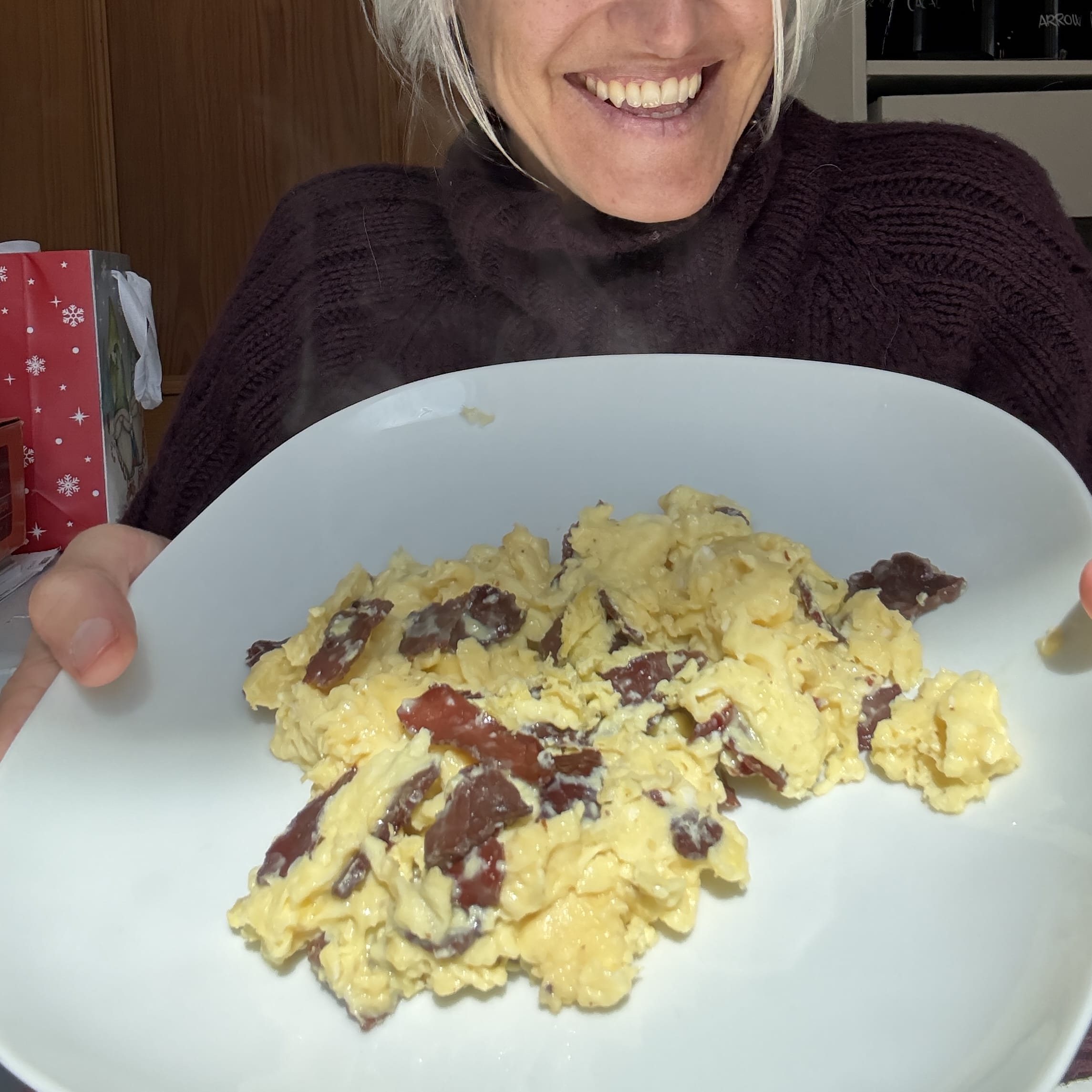
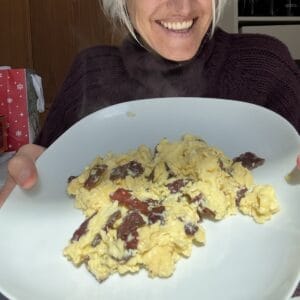
INGREDIENTS
3 uova medie
20 g collagene
25 g Pure Biltong
5 g Ghi
PROCEDURE
Sciogliere un po di ghi in padella e rosolare i Pure Biltong.
Per non avere grumi, in una ciotola sbattere un uovo usando la frusta, poi aggiungere il collagene e continuare a sbattere. Quando il composto è ben liscio, aggiungere le altre uova. Versare il tutto in padella quando i biltong sono belli rosolati. Salare e cuocere fino alla consistenza desiderata
Proteine 53 g
Leucina 3,4 g
Grassi 23 g
Carboidrati 2 g
Calorie 433
Ricetta di Gloria
09 April 2026




Mi sono accorta dopo qualche tempo che non mi cadevano più i capelli